
Jul-Aug (peak dry)
Driest, most reliable sunrise window of the year, though trailhead parking and summit space fill fast; book guides well ahead.
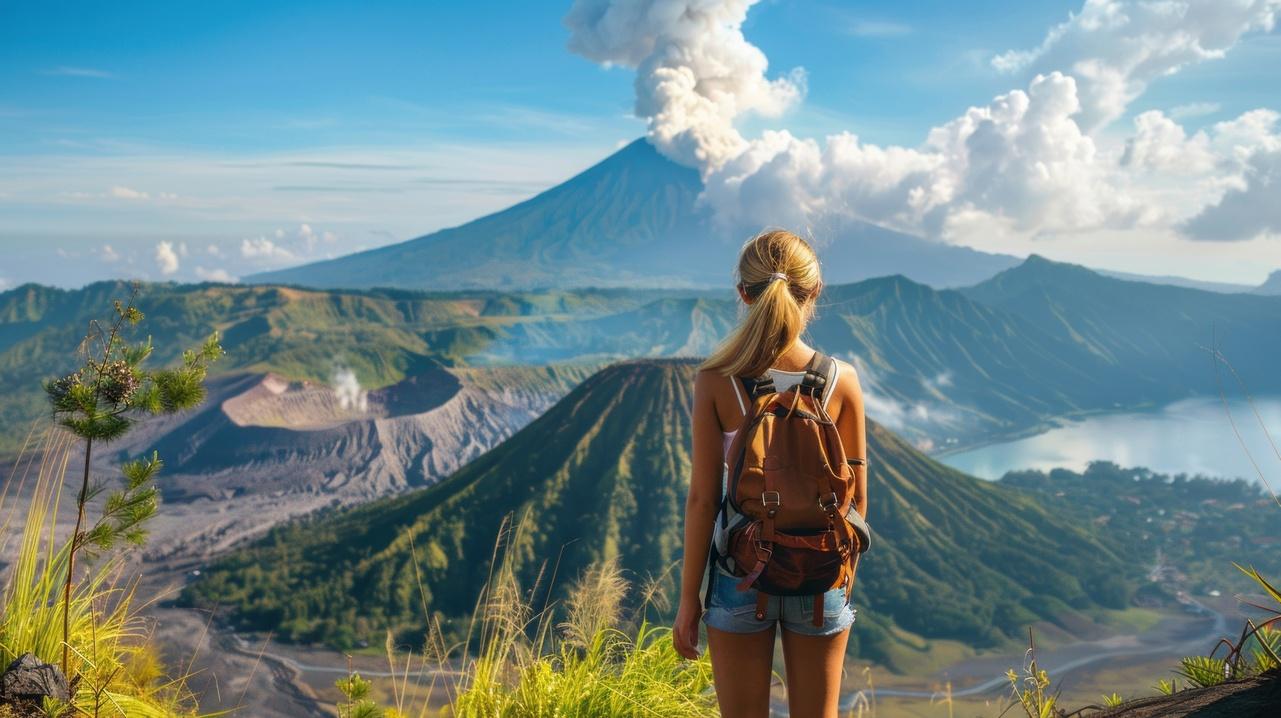
An active volcano in Bali's highlands, ringed by a crater lake, black lava flows and terraced coffee slopes.
Mount Batur last erupted within living memory, its most recent significant activity recorded in 2000, which makes it one of the few volcanoes in Bali still visibly shaping its own landscape.
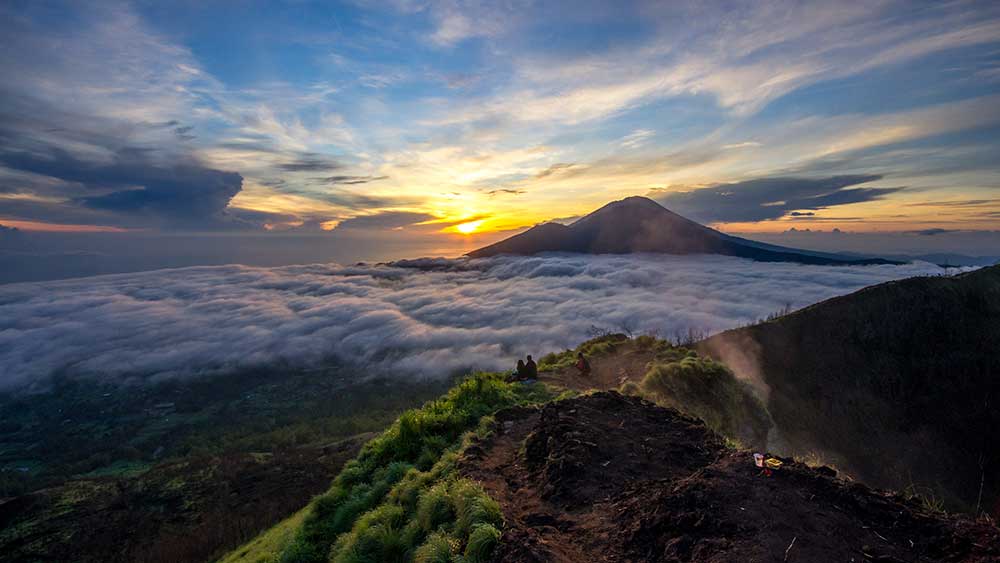
The mountain rises inside a caldera roughly thirteen kilometres across, a collapsed bowl formed by cataclysmic eruptions tens of thousands of years ago. Within that bowl sits a second, younger cone, and around its lower flanks lie fields of black lava that have never fully greened over. The effect is stark against the tropical island beyond: this is Bali stripped to rock, ash and open sky.
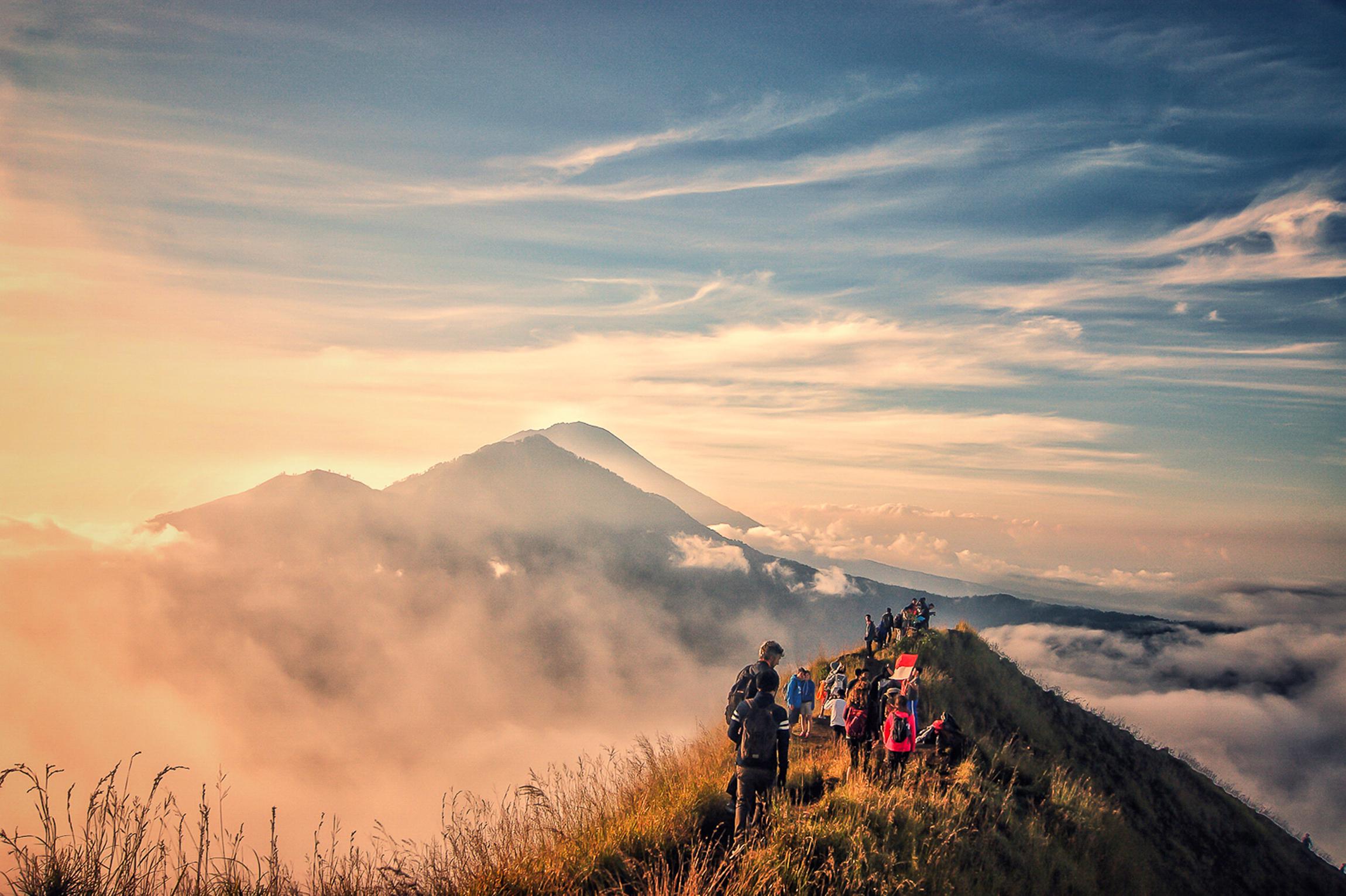
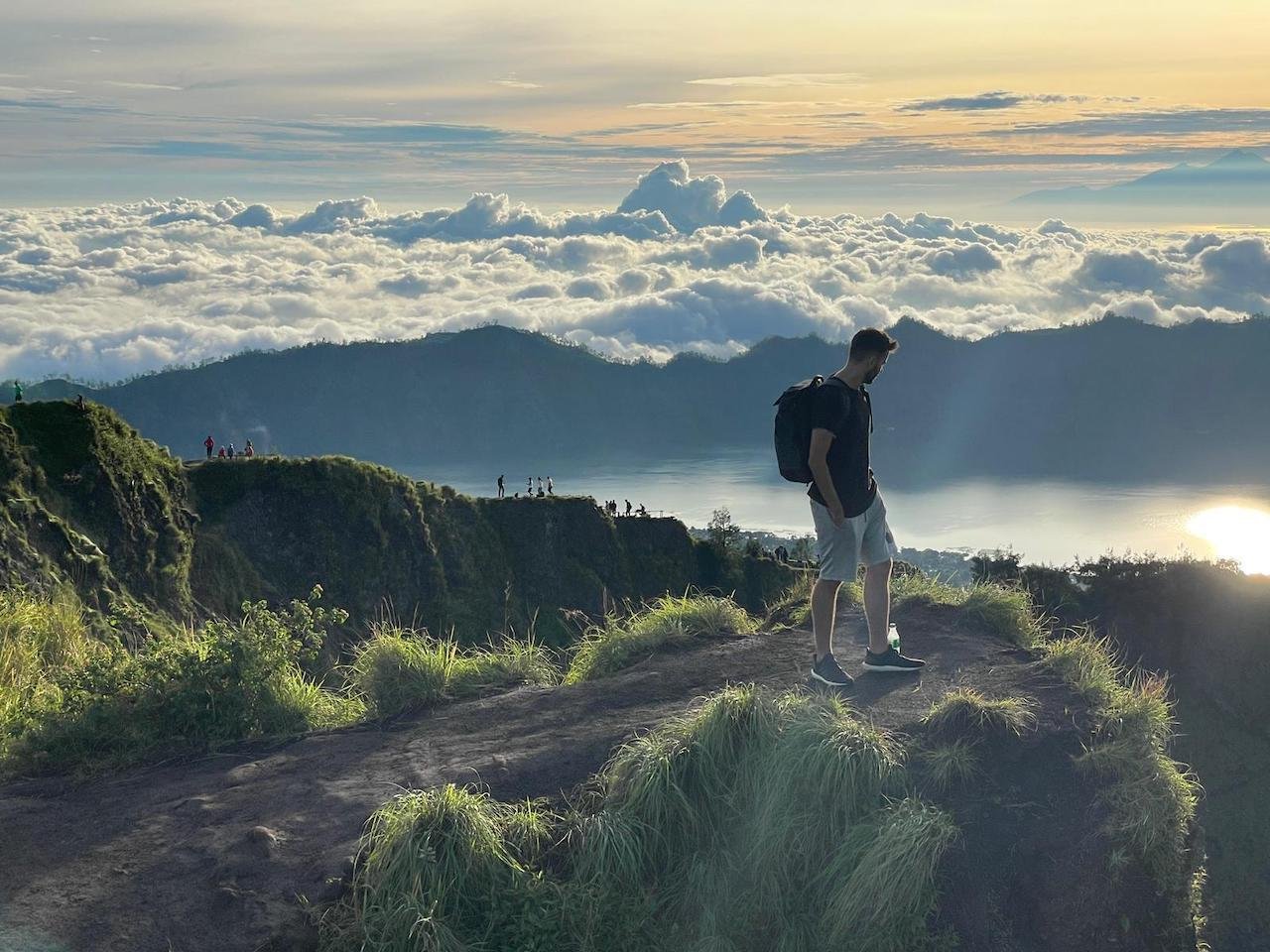
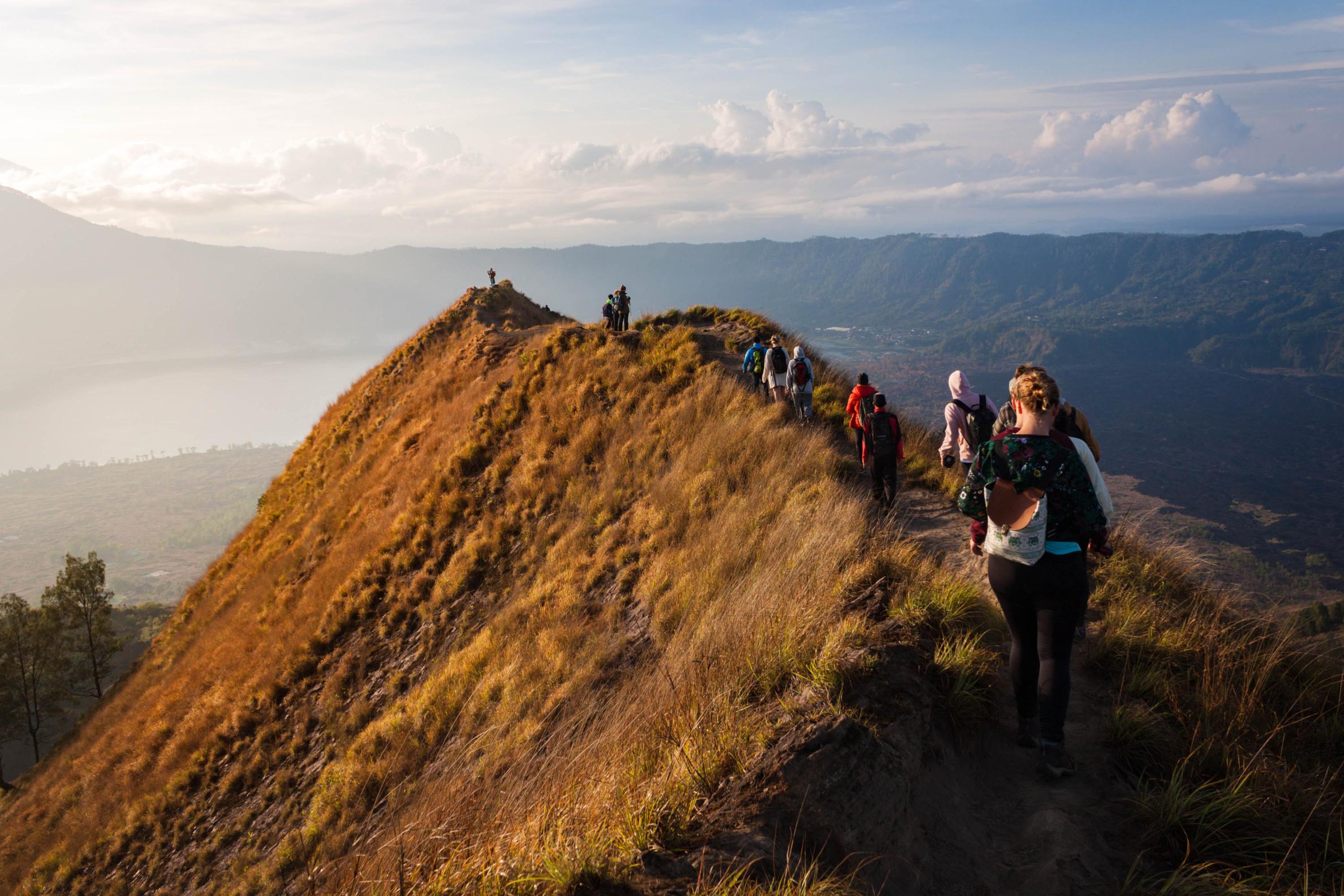
What defines the region today is the daily ritual of the ascent. Long before first light, small groups gather at the trailheads near Toya Bungkah and begin the climb toward the summit ridge, headlamps threading up the dark slope. Mount Batur Tours have grown around this single hour of dawn, when the sun breaks over the far rim and the caldera fills with colour. The Balinese hold the mountain sacred, and Pura Ulun Danu Batur, the temple honouring the lake goddess Dewi Danu, anchors the spiritual life of the surrounding villages.
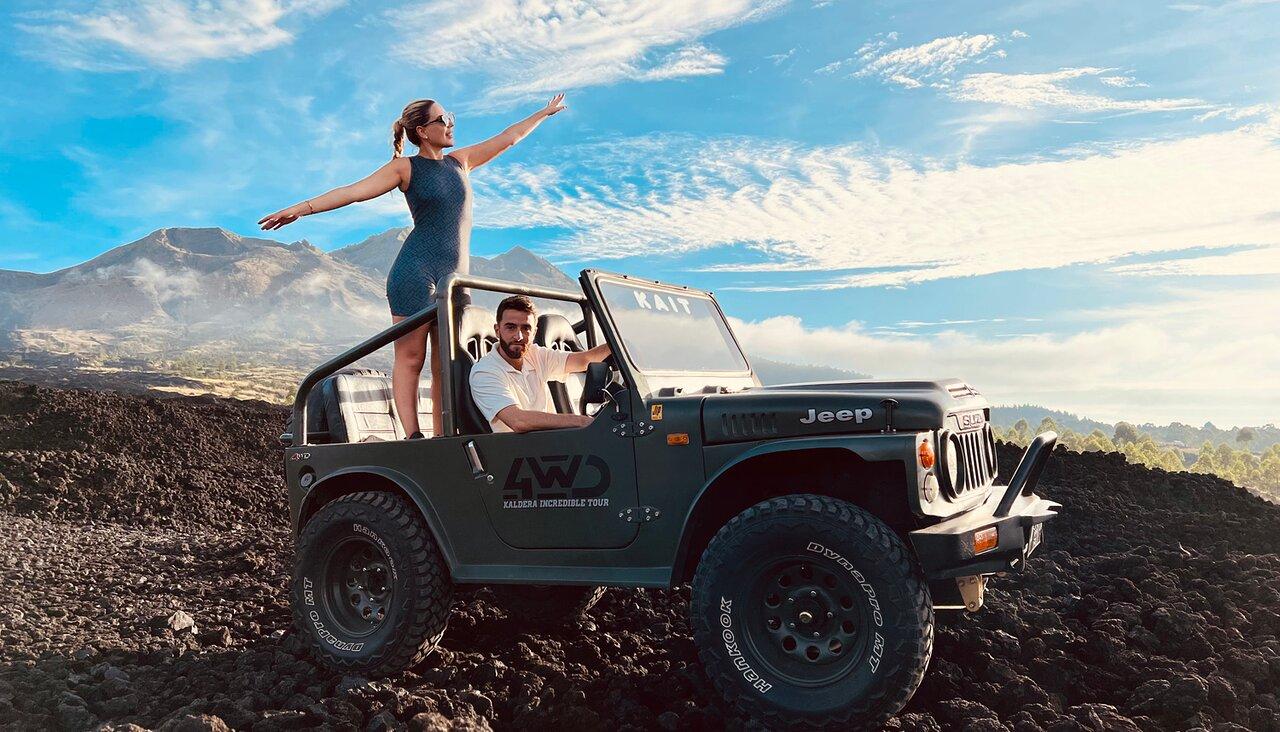
The attractions here fit together like a single unfolding day. Mount Batur sunrise trekking delivers the summit and the light. For those who prefer to ride, jeep tours grind across the lava fields in open 4WDs, while ATV adventure tours carve through plantation tracks and riverbeds. Afterward, the natural hot springs on the lakeshore ease tired legs in mineral-warm water drawn from the volcano itself. Private tours knit these threads together for travellers who want the caldera on their own terms, at their own pace.
Beyond the headline peak, the Kintamani plateau carries its own quiet character. Arabica coffee grows on the terraced slopes, citrus orchards ring the villages, and Lake Batur feeds a farming culture that has endured beside an active volcano for centuries. Trunyan, on the lake's eastern shore, preserves customs found nowhere else on the island. The destination suits the early riser and the curious walker, the family seeking a gentler morning, and anyone drawn to a landscape that still smoulders faintly beneath its crust. Well-run Mount Batur Tours tours make the mountain approachable without softening its raw geology, and reserving Mount Batur Tours tickets in advance secures a place on the ridge for the moment the horizon ignites. Few Mount Batur Tours tour experiences feel as elemental as watching a sea of cloud drain away below a volcanic summit at daybreak.
“This is Bali stripped to rock, ash and open sky, a landscape that still smoulders faintly beneath its crust.”
Crater Lake & Highlands
One Volcano, Many Ways
Mount Batur is an active volcano ringed by ways to experience it, and the right choice comes down to how you want to move. Some visitors want to summit on foot; others prefer to ride the black lava fields, soak beside the caldera lake, or hand the logistics to a private guide. The pages below sort the volcano by effort and style, from steep guided ascents to relaxed four-wheeled crossings, so you can match the crater to your own pace and mood.
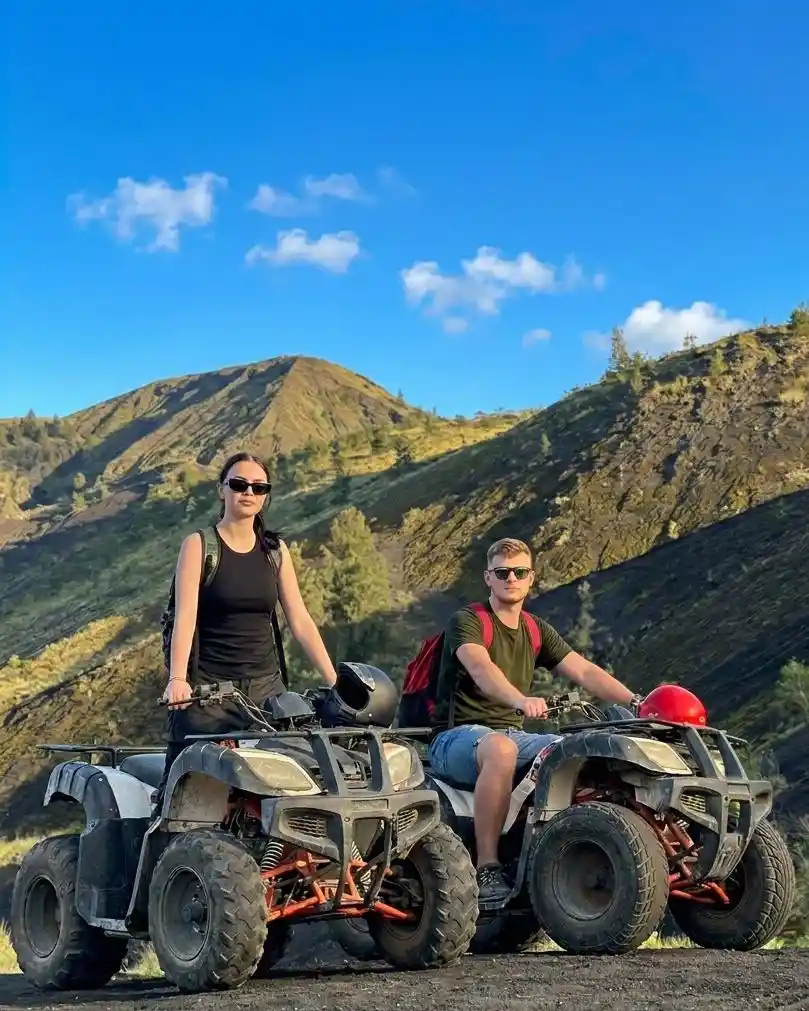
ATV
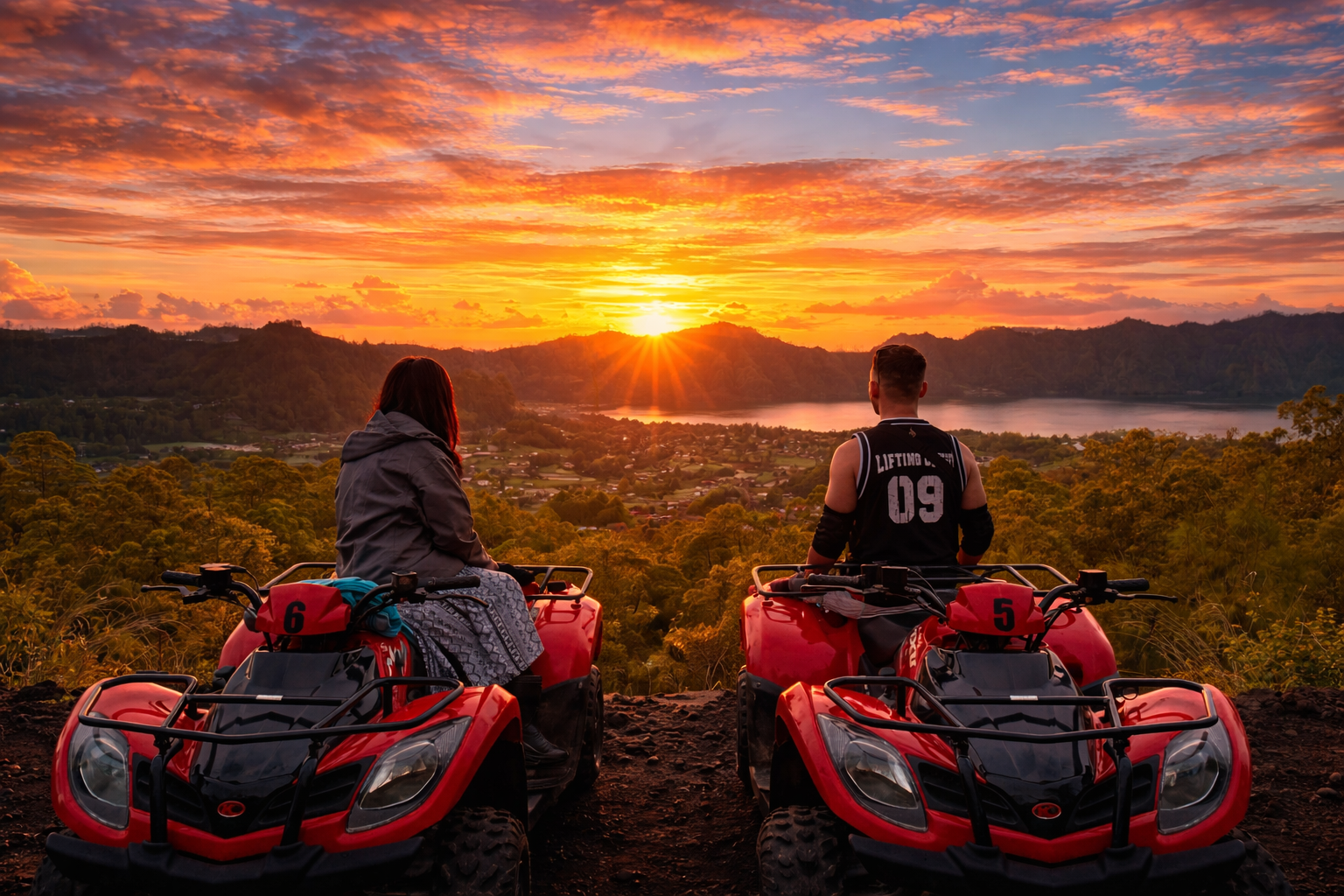
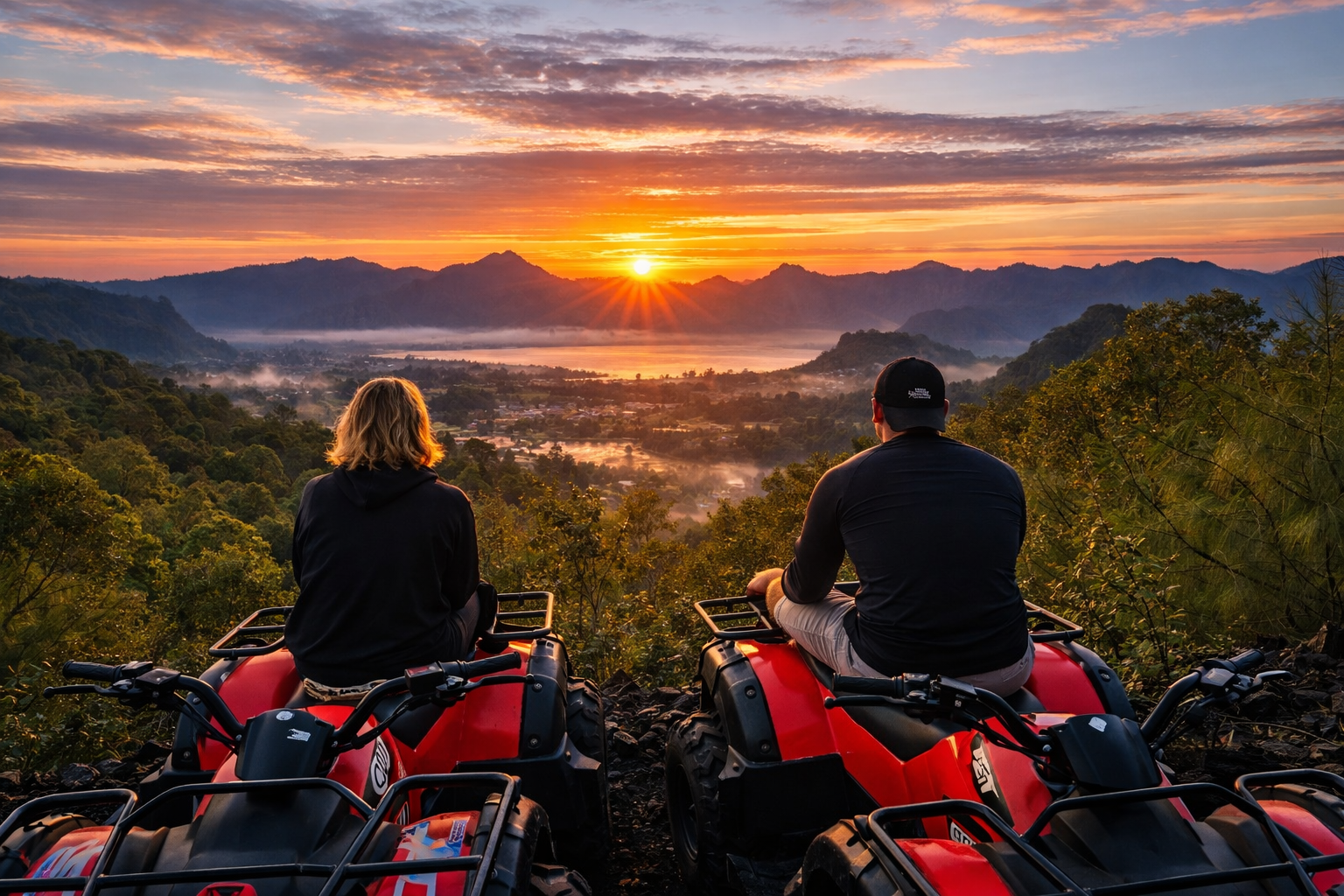
Drive your own quad bike through jungle tracks, muddy trails, and dark lava terrain around the volcano's base, a hands-on route rather than a guided walk.
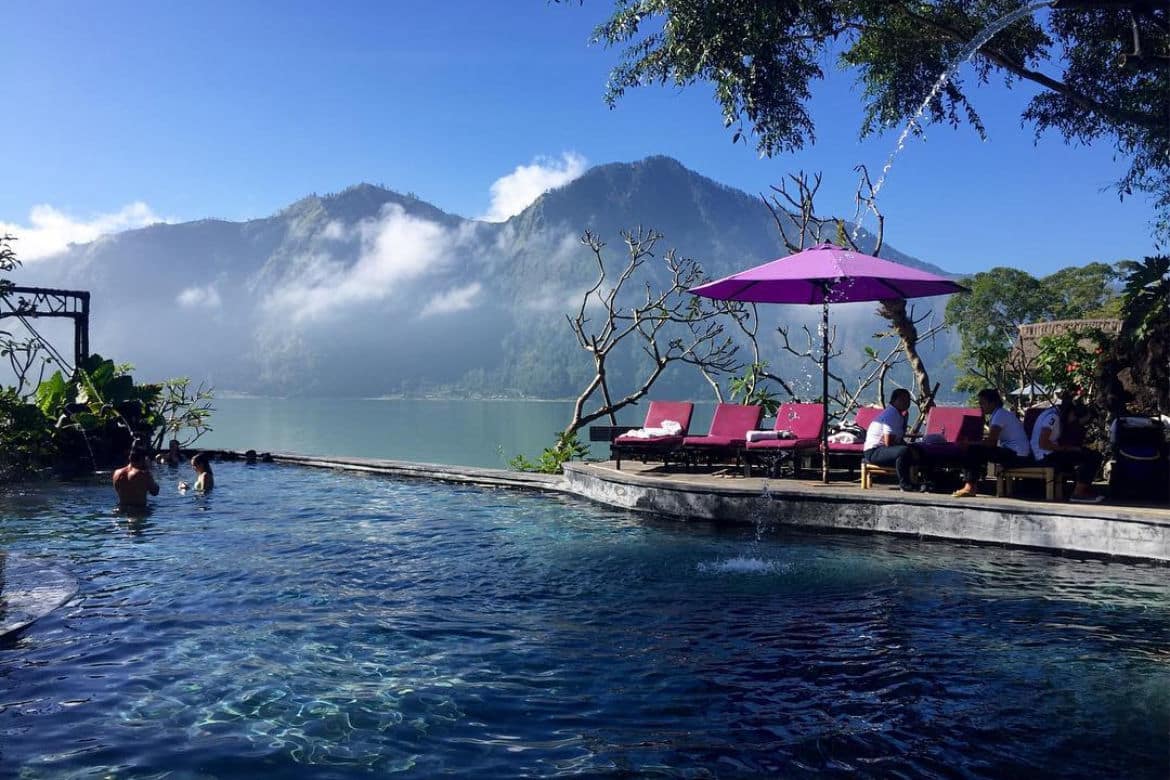
Hot Springs
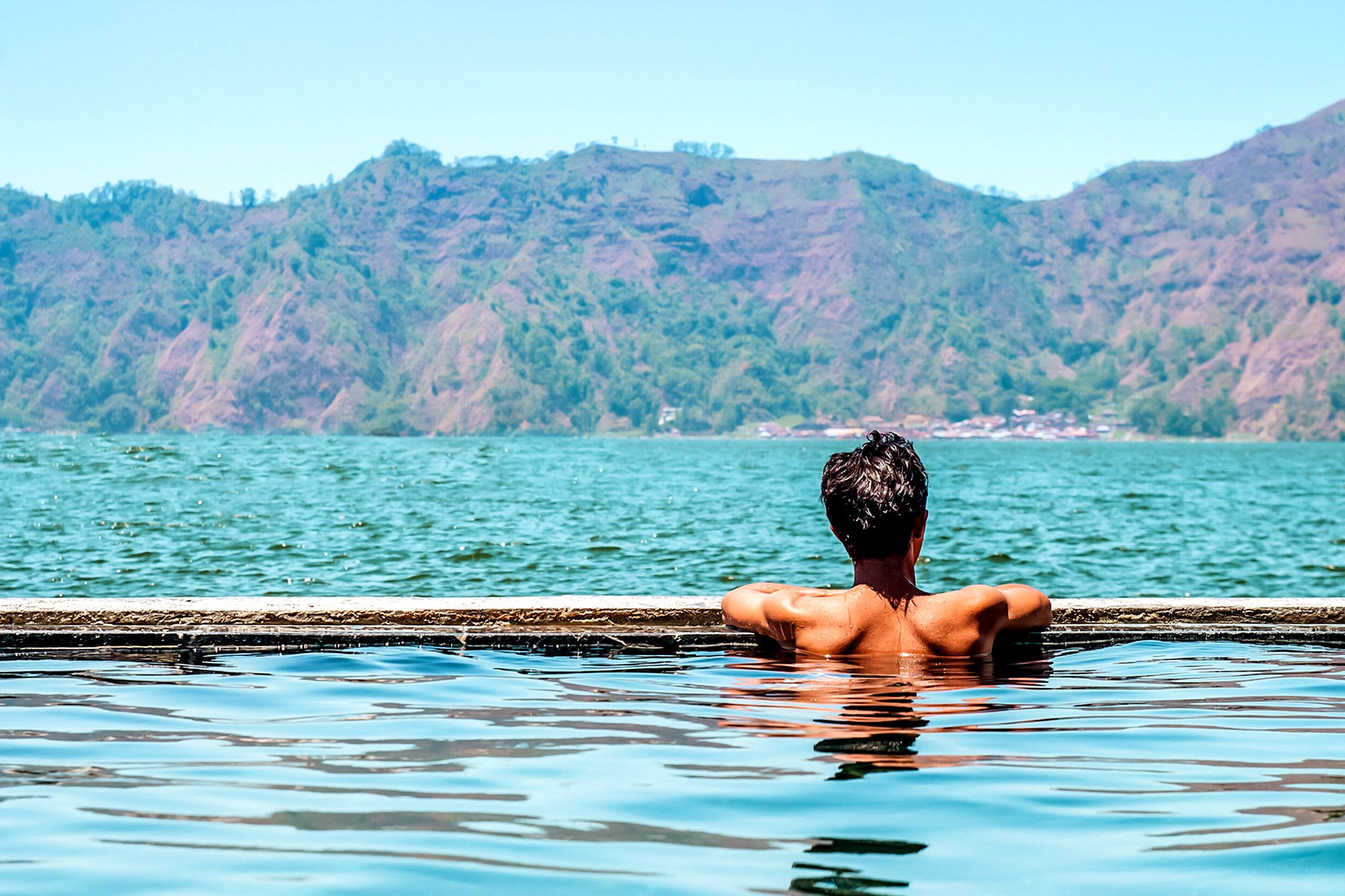
Pair the volcano with a soak in mineral-rich geothermal pools fed by the same activity beneath Batur, set along the caldera lake shore.
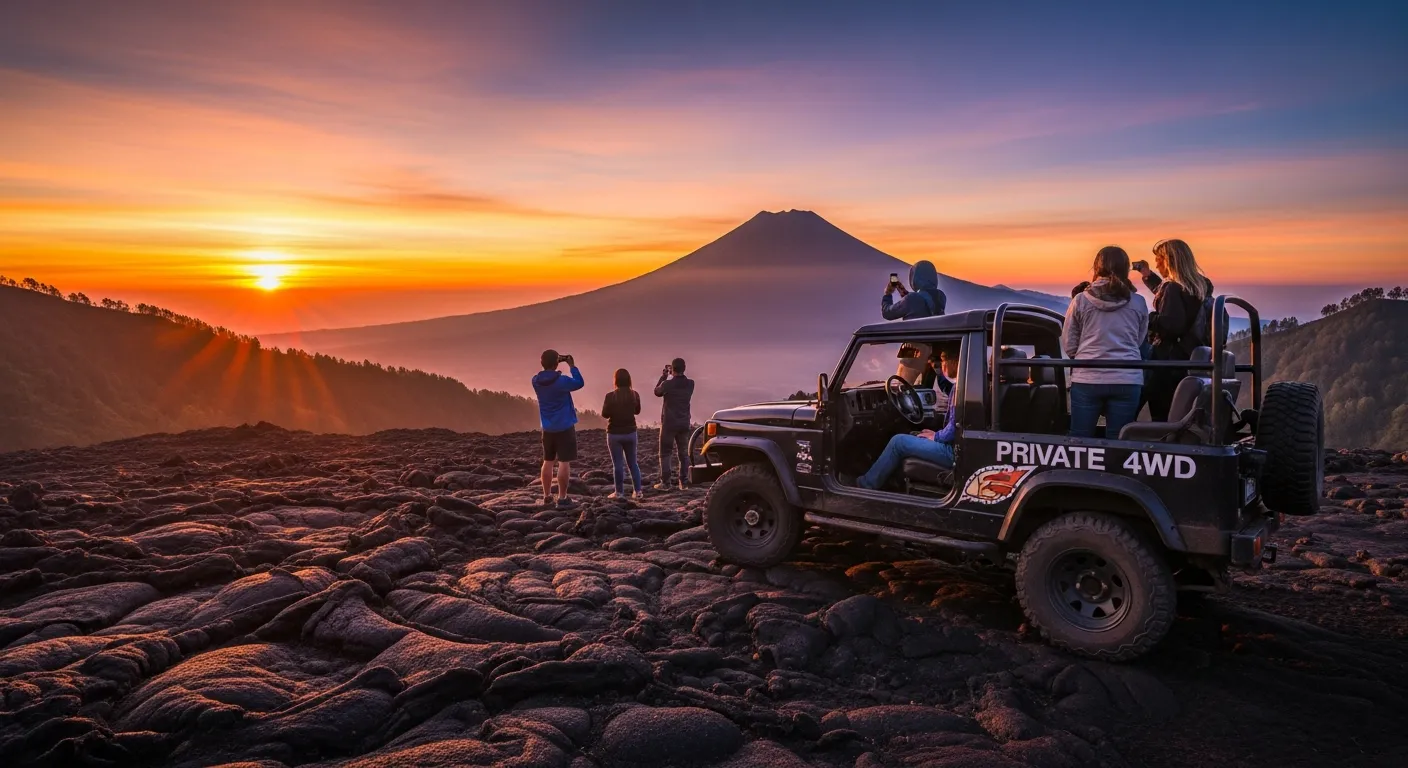
Private Tour
A guide and driver dedicated to your group alone, building a custom volcano day at your own pace with flexible stops and personal attention throughout.
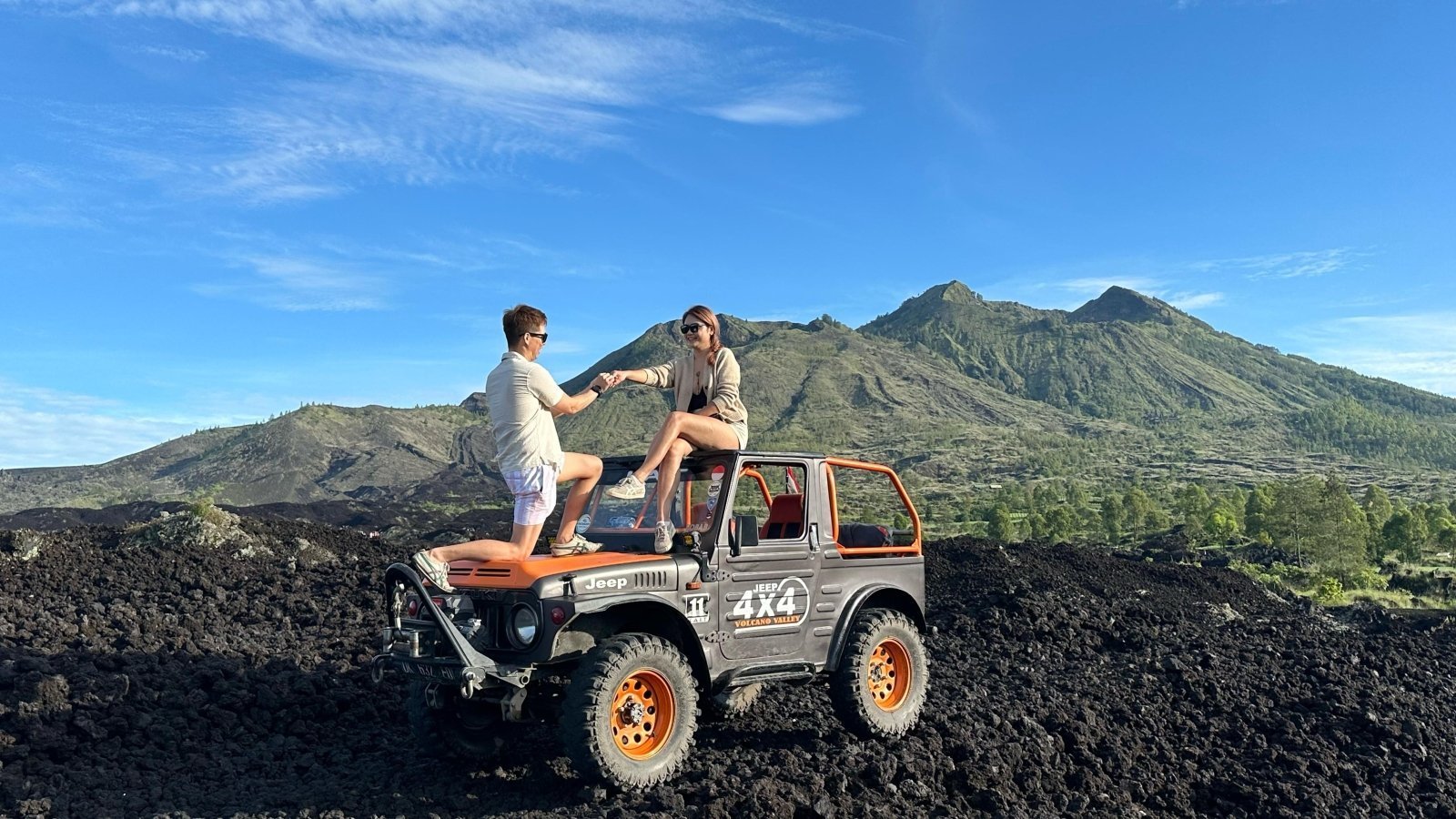
Off-Road
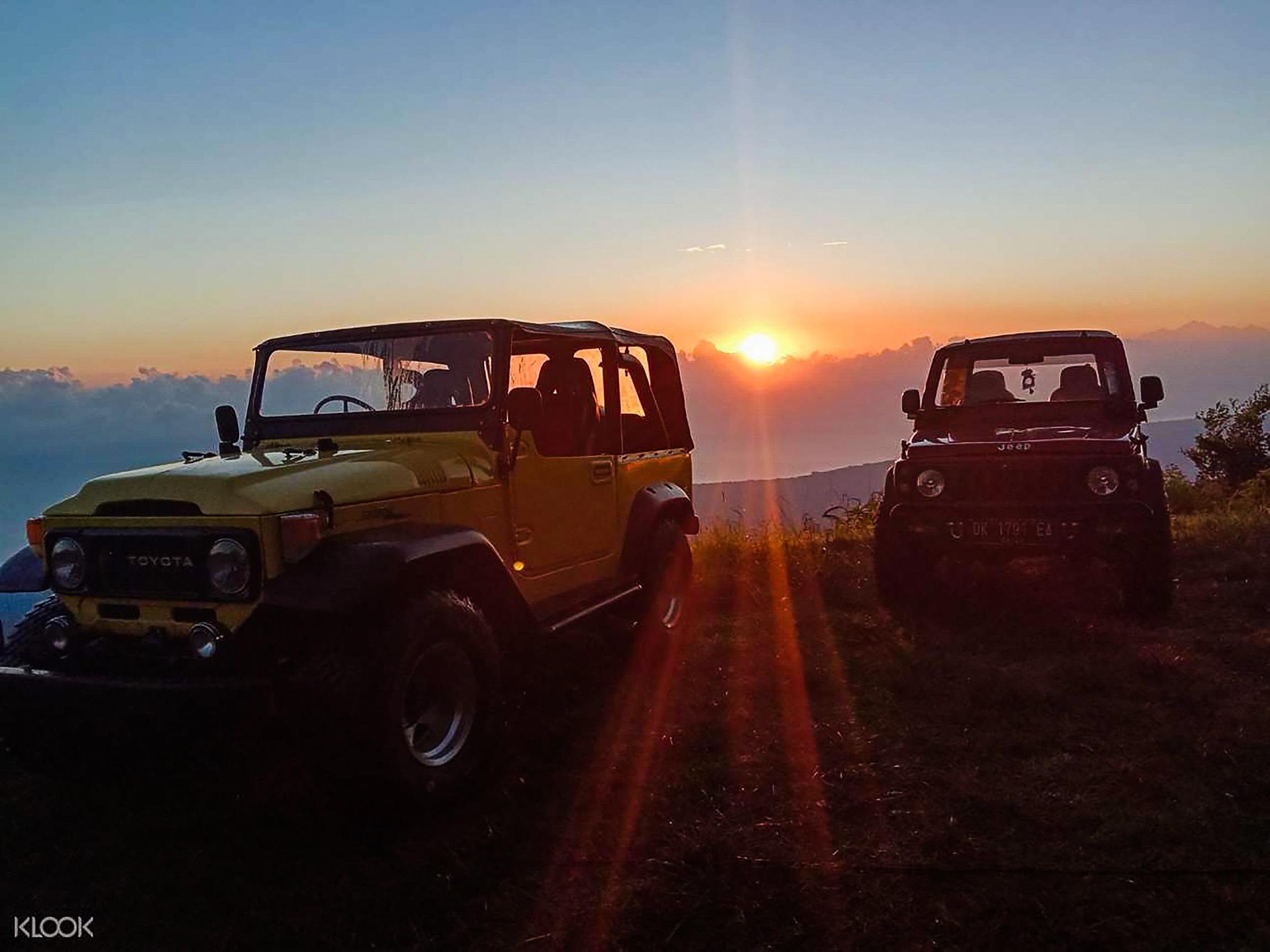
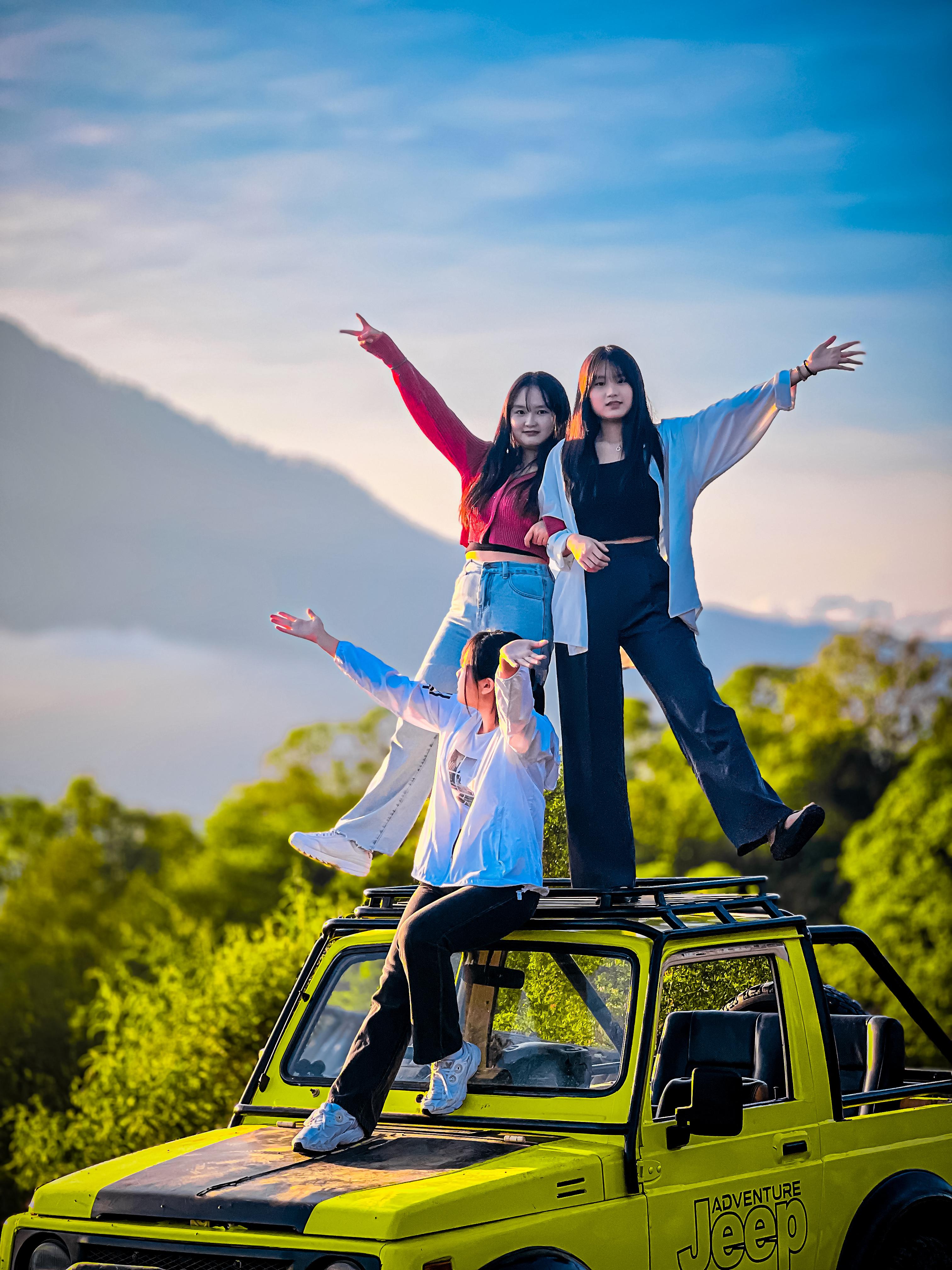
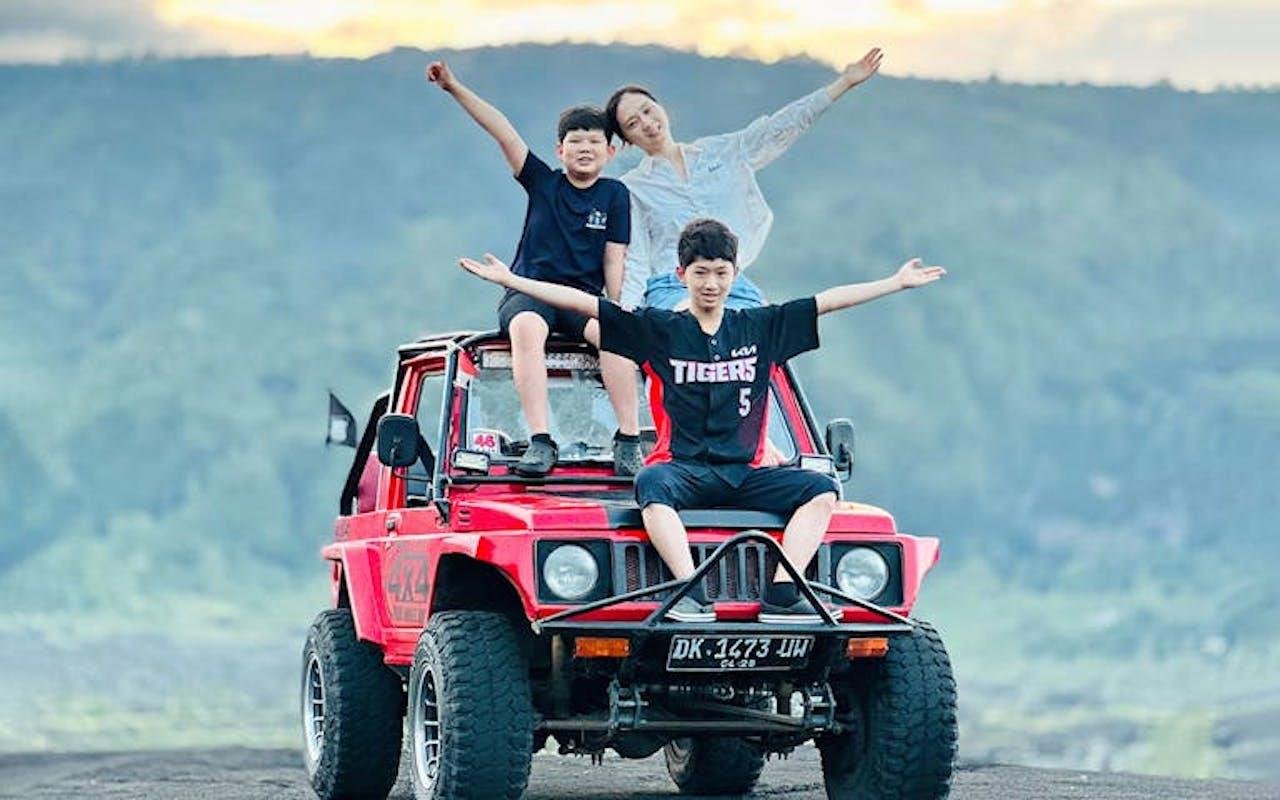
Ride an open 4WD across the hardened black lava fields to summit-facing lookouts, reaching the volcano's flanks without the steep climb on foot.
Trekking
A guided two-hour ascent up loose volcanic scree to the 1,717m summit, where guides steam-cook eggs in ground vents while you watch light break over the caldera.
Batur rewards a stacked schedule: the sunrise trek runs pre-dawn, which leaves the rest of the day open for pairing activities. These three plans scale from a single sunrise-and-soak day to a slower stay built around Kintamani, so you can match the sequence to how much time you have.
Guided pre-dawn hike to the crater rim, roughly 2 hours up to reach the top for first light, then a descent past steam vents. Bring a light layer for the cold summit.
View guideRefuel at a warung near the trailhead after the descent, around an hour. A mid-range plate here runs IDR 75,000-150,000.
Combine the morning trek with a geothermal soak beside Lake Batur to loosen tired legs, allowing 2-3 hours. Pack swimwear and a towel.
View guideRide a 4WD across the hardened lava fields from past eruptions, about 2-3 hours across terrain you cannot walk. A sturdier alternative for those skipping the summit hike.
View guideSwap the jeep for a self-driven quad over ash tracks and forest trails if you want hands-on riding, roughly 2 hours. Closed shoes required.
View guideDrive south to the sacred water temple for the purification ritual and grounds, about 2 hours including a sarong stop.
Book a private car and guide to set your own pace around the rim and lake without a group timetable, a full flexible morning.
View guideWander the quieter shoreline villages and coffee stalls at the water's edge, an unhurried 2-3 hours. A local coffee runs IDR 25,000-40,000.
Close the trip over a slow dinner in Kintamani. A Bintang at a local warung sits around IDR 35,000-50,000.
Mount Batur has no public transit of its own, so getting around means arranging hotel pickup with a private driver or trek operator ahead of time. Timing is the main variable to plan around, since sunrise treks and sunset trips run on very different clocks.
Sunrise trek and jeep operators collect guests from hotels between roughly 1:30 and 2:30 AM, timed so the group reaches Toya Bungkah by 3:30-4 AM and starts climbing before dawn. Sunset or midday tours (jeep crater loops, hot springs) run on normal daytime schedules with pickup a few hours before the activity.
From Ubud it is about a 1-1.5 hour drive to Toya Bungkah village at the base of the mountain, the usual starting point for treks. From south Bali beach areas such as Seminyak, Kuta, or Canggu, expect 2-2.5 to 3 hours depending on traffic, which is why pickup there starts earlier.
Toya Bungkah itself is small enough to cover on foot, with the trek meeting point, warungs, and hot-spring entrances all within a short walk of each other. Note that small warungs and entrance fees around the village are cash-only, so carry IDR before arriving.
Locals and some independent travelers use ride-hailing apps like Gojek for short hops around Kintamani, though coverage is thinner than in south Bali or Ubud. It suits getting between the village and nearby hot springs rather than the full transfer from your hotel.
From the airport: From I Gusti Ngurah Rai International Airport (DPS) in Denpasar, the only practical option is a private car direct to the Kintamani/Mount Batur area, taking 2.5-3 hours and costing around IDR 700,000.
July and August give the clearest sunrise odds over the crater, but April to June and September offer nearly the same dry-season stability with noticeably thinner trails.
Driest, most reliable sunrise window of the year, though trailhead parking and summit space fill fast; book guides well ahead.
Nearly the same visibility as peak months with fewer groups on the crater rim, a common trade recommended by local guides.
Trail turns muddy and summit cloud can hide the sunrise entirely, though early starts sometimes catch a clear break; pack a rain layer regardless.
Balinese and domestic visitors add to numbers around full moon and on Saturdays, so a clear weekday in the shoulder months stays the calmer choice.
Mount Batur tours sit at the budget end of Bali's activity market: a shared sunrise trek or jeep ride costs less than a mid-range meal in many Western cities, though prices climb fast once you add a private vehicle or bundled extras.
Daily budget: A realistic daily budget per person runs IDR 500,000-800,000 for a shared trek or jeep tour plus meals, versus IDR 1,200,000 or more once a private vehicle, hot spring entry, and tips are added.
A Batur sunrise trek ends by mid-morning, leaving the rest of the day open for sights along the Kintamani-Ubud corridor. These four stops pair naturally with a Batur ascent, since the road down from the crater rim passes close to each one.
A Hindu holy spring complex at Tampaksiring where pilgrims and visitors bathe in purification pools fed by natural springs, one of Bali's most active working temples rather than a static monument
Tiered rice paddies cut into a river valley using the centuries-old subak irrigation system, with a walkable path down into the terraces and roadside warungs overlooking the fields
An open-air burial ground reachable only by water, where the Bali Aga people lay their dead beneath a sacred tree instead of cremating or burying them, offering a direct look at a funeral custom found nowhere else on Bali
A working luwak and highland coffee grower at crater-rim elevation where visitors walk through the plants and sample brews grown in the volcanic soil, a low-effort stop that fits neatly between the crater and the road back down
Pick a base by weighing pre-dawn convenience against comfort: staying near the volcano cuts the pickup window to minutes, while Ubud or the south coast trades that for better food, wifi, and room choice at the cost of a longer ride before the climb.
Lakeside villages at the base of the crater, mostly guesthouses and simple homestays with hot-spring pools. Rooms are basic and roads can be noisy near trucks, but a 4am wake-up call feels far less brutal.
Crater-rim hotels and guesthouses with sweeping views over the lake and volcano, a step up in comfort from the lakeside villages. Highland nights get cool, so pack layers, and dining options thin out after dark.
Bali's arts-and-wellness hub, with far more restaurants, spas, and room styles from converted rice-field bungalows to design hotels. The trade-off is an earlier alarm to reach Kintamani before sunrise.
Full resort infrastructure, beach clubs, and nightlife, best for travelers treating the volcano as a single side trip rather than the trip's center. Expect the longest pre-dawn transfer of any base.
Everything you need to know about visiting Mount Batur Tours
One full day is enough for the classic sunrise trek and hot spring stop, but many visitors add a second day to combine Mount Batur Tours with nearby temples and rice terraces. If you want a slower pace with jeep touring, coffee plantation visits, and a lake cruise, plan for two days based out of Kintamani or Ubud.
Mount Batur, known locally as Gunung Batur, is an active volcano rising 1,717 meters above sea level and is best known for its sunrise trekking route over a dramatic volcanic caldera. It sits within a UNESCO-recognized geopark, and the crater rim views over Lake Batur and Mount Agung are the main draw for most Mount Batur Tours.
Peak season for clear sunrise views runs June through September, when dry conditions give the best visibility from the summit. Outside these months, tours still run, but cloud cover can occasionally obscure the horizon at dawn.
Most travelers land at I Gusti Ngurah Rai International Airport (DPS) in Denpasar and continue by private car, since Kintamani has no train or public bus link. The transfer takes roughly 2.5 to 3 hours and costs around IDR 700,000 for a private vehicle.
There is no public transit network in Kintamani, so getting around for things to do in Mount Batur means hiring a private driver or joining a guided tour. Sunrise trek transport with a private car or guide typically runs from IDR 400,000 to 500,000.
Mount Batur Tours are moderately priced by Bali standards: a mid-range meal costs IDR 75,000-150,000, coffee runs IDR 25,000-40,000, and a local Bintang beer at a warung is IDR 35,000-50,000. Factoring in guided trek transport and meals, a day trip is affordable compared with multi-day island touring.
Mount Batur is generally safe to climb, since Indonesian authorities monitor the volcano for activity and treks run daily with experienced local guides. Sturdy shoes, a headlamp, and a warm layer are recommended, as the pre-dawn trail is dark and temperatures at the summit can feel notably cooler than at sea level.
A small tip for your trekking guide is customary and appreciated, though not mandatory, and modest dress is respected at any temple stops along the way. Speaking softly and following the guide's pace on shared trail sections is standard courtesy on group Mount Batur Tours.
Families with reasonably fit older children can manage the trek, since the path is steep but non-technical and moves at a manageable pace with breaks. Very young children may struggle with the early 2-4 AM start time and the loose volcanic terrain, so a private guide who can adjust pace is a better fit than a large group tour.
Staying in Kintamani puts you closest to the trailhead for an early start, while Ubud offers more dining and lodging choices with a longer pre-dawn transfer. Either base works well for skip-the-line Mount Batur sunrise tours, depending on whether convenience or amenities matter more to you.
Choose from amazing attractions and create unforgettable memories in this beautiful city
View All Attractions