10 hr
Mount Batur Sunrise Trek with Breakfast & Coffee Tasting
- Expert local guide
- Small group
- Skip-the-line access
- Free cancellation
Mount Batur Sunrise Trekking — Guided Crater-Rim Ascent
Climb before the dark thins, meet the light at the rim.
Compare fares, pick the fit — all bookings are mobile-voucher and eligible for free cancellation where shown.
10 hr
11 hr
10 hr
Hand-picked experiences loved by thousands of travelers
7–10 hours
Free Cancellation
Conquer Bali's highest volcanic crater at dawn, then unwind in natural hot springs after.
5–10 hours
Free Cancellation
Conquer a volcanic summit at dawn, then cool off at a hidden jungle waterfall — all in one epic Bali day.
8 hours
Free Cancellation
Climb an active Balinese volcano at dawn and watch the sun rise over a stunning caldera landscape.
Private driver or shared shuttle collects hikers from Ubud, Sanur, Canggu, or Kuta for the transfer to Kintamani.
Guides from the local trekking association meet hikers at Pura Jati or Toya Bungkah for a safety briefing before the climb.
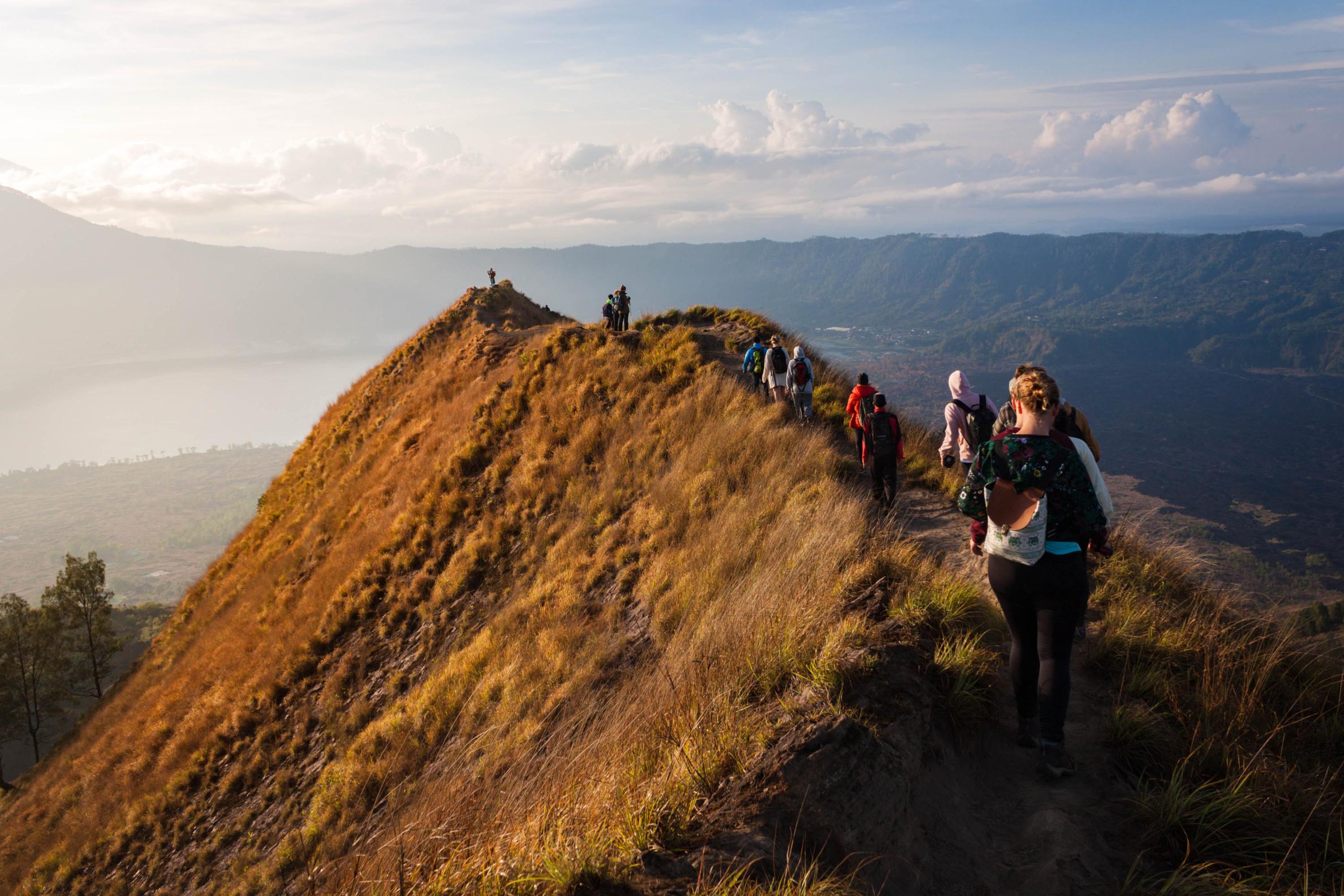
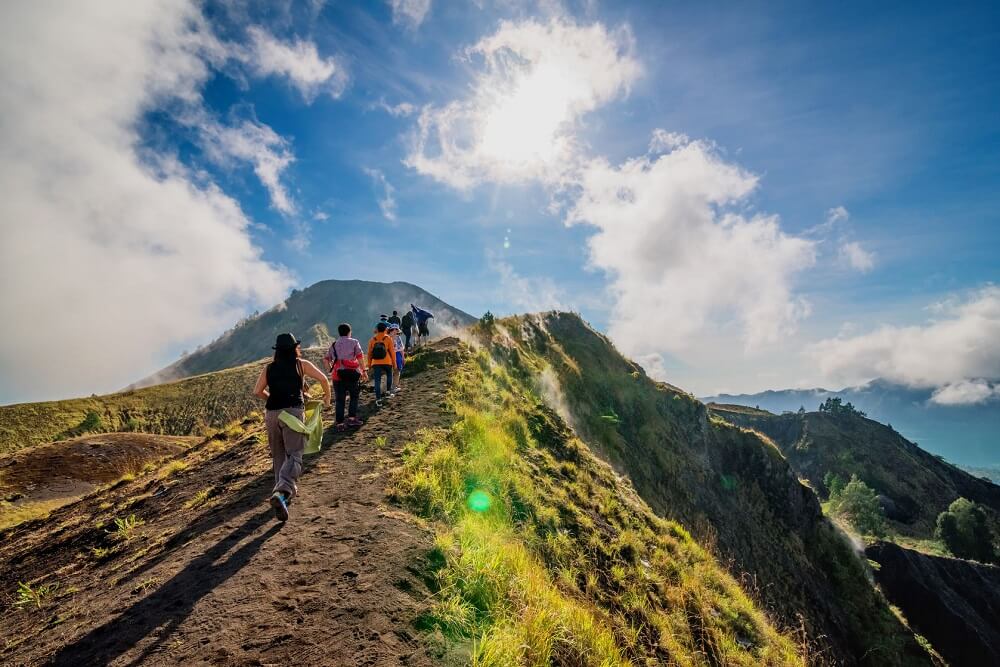
The trail climbs from paved lower paths onto rocky volcanic terrain, gaining most of its elevation in the final steep push to the crater rim.
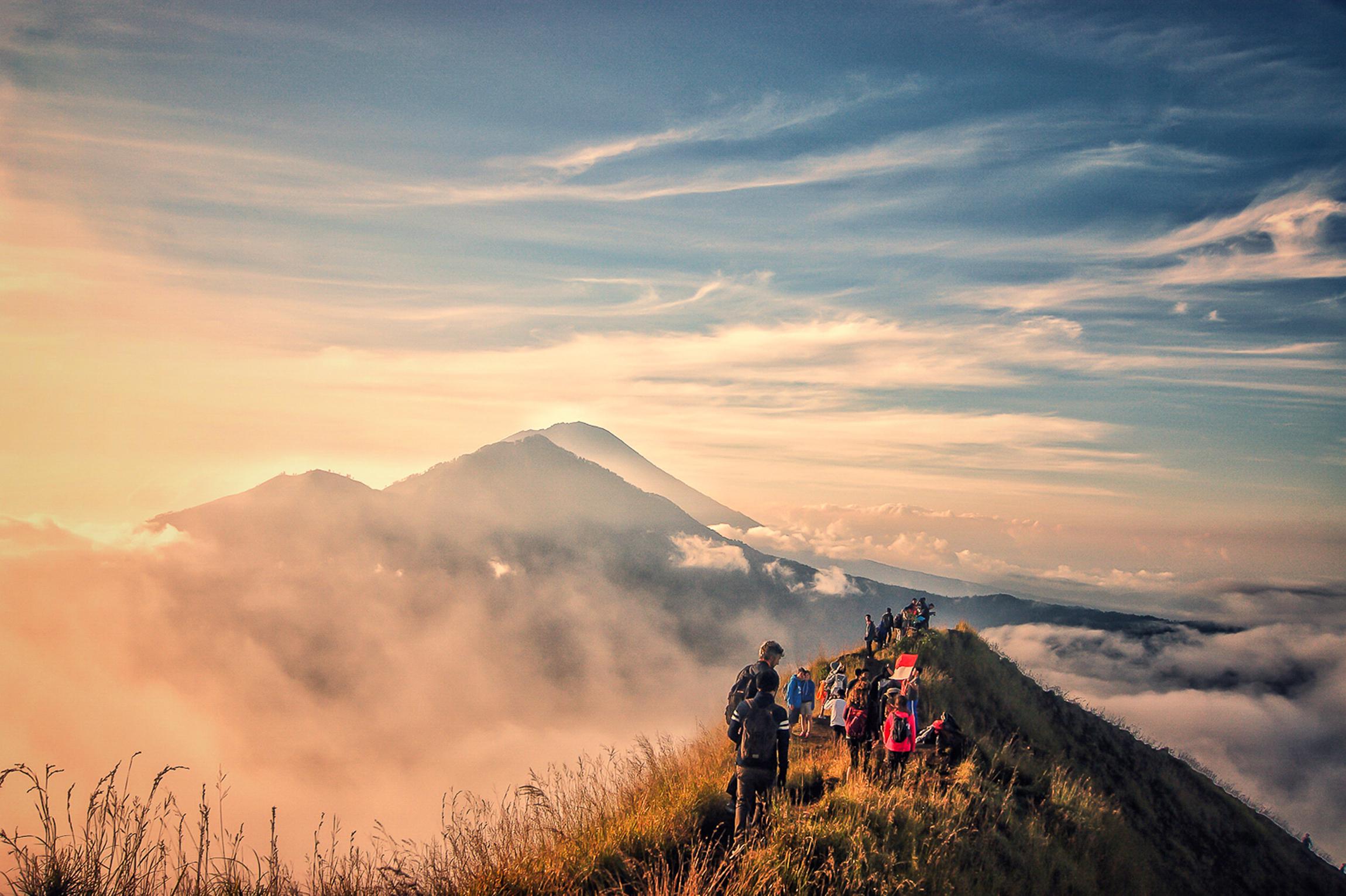
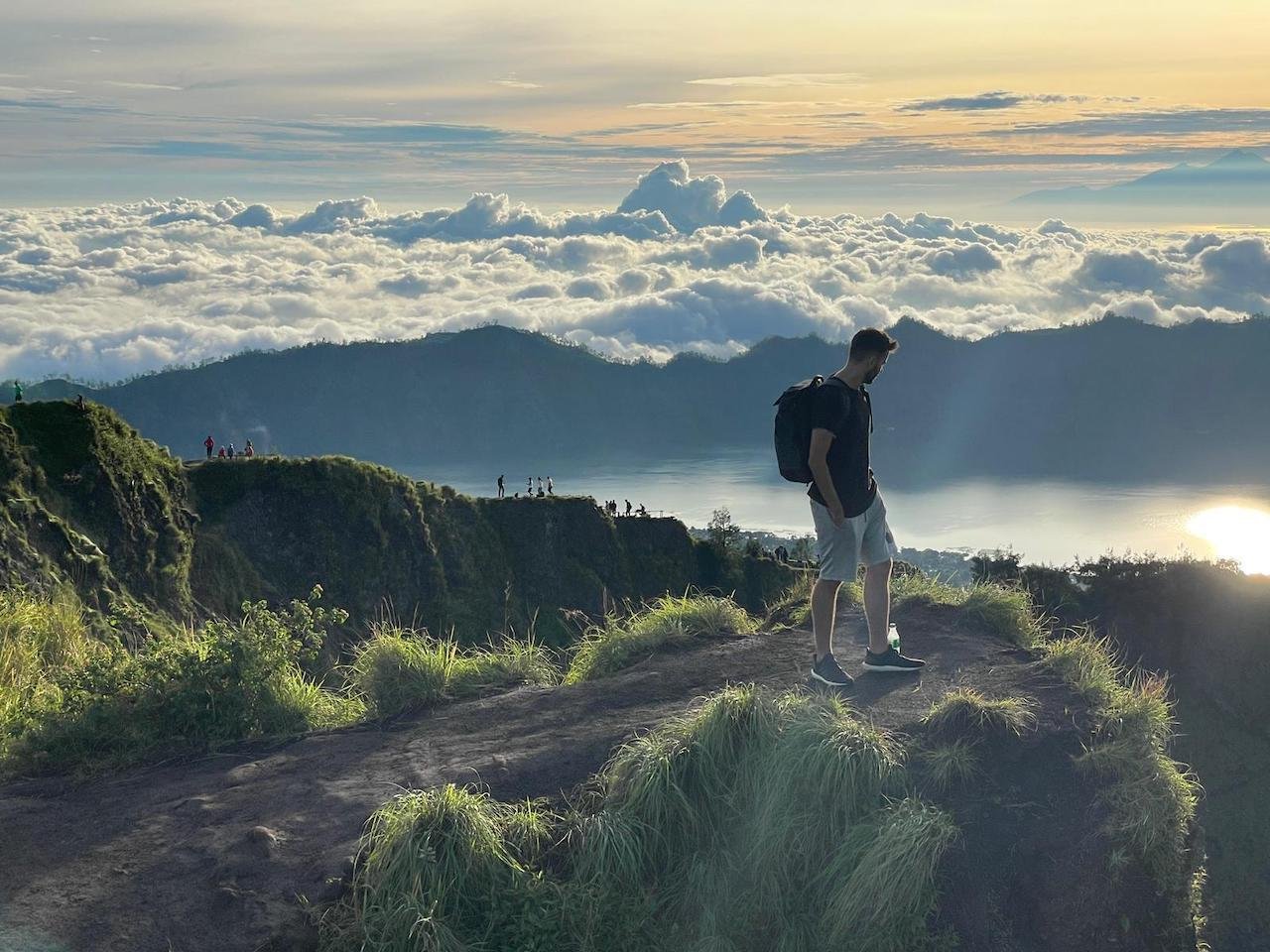
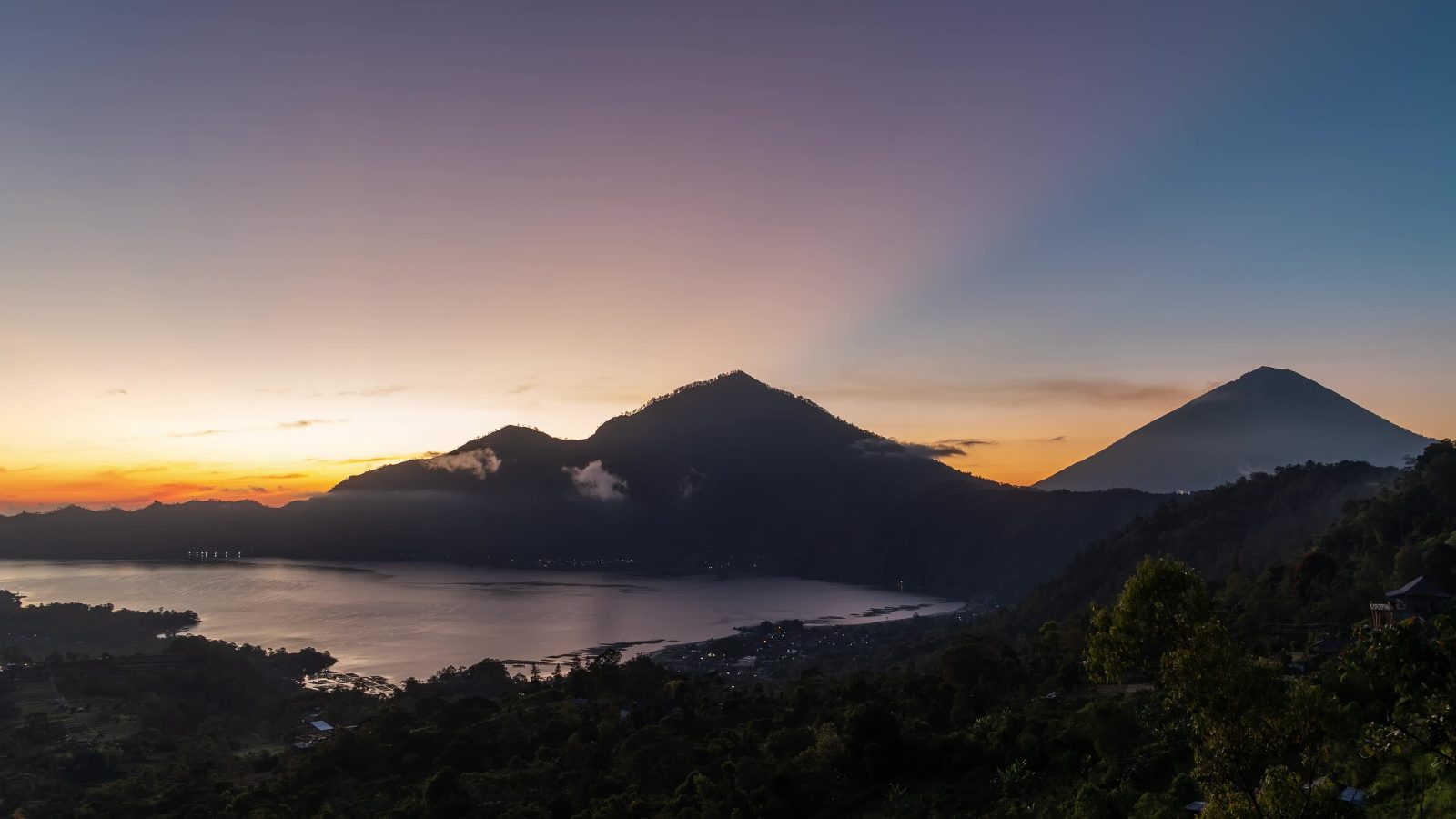
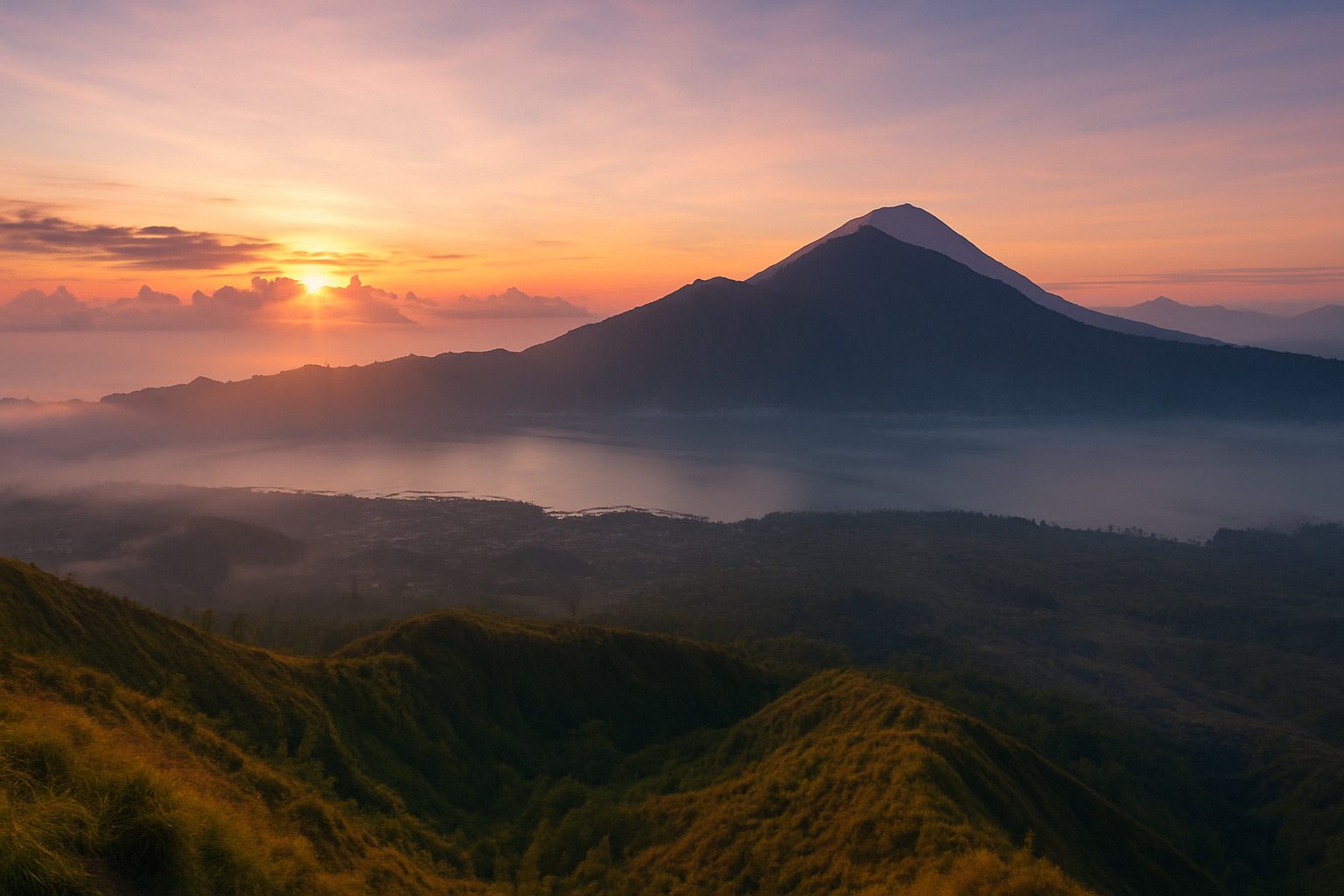
Hikers reach the 1,717-meter summit in time to watch the sun rise over Mount Abang and Mount Agung, often with breakfast served on-site.
Guides lead a walk around the active crater rim, pointing out steam vents and the 1963 and 2000 lava fields.
The return route follows the same trail back down to the Pura Jati or Toya Bungkah starting point, finishing the trek.
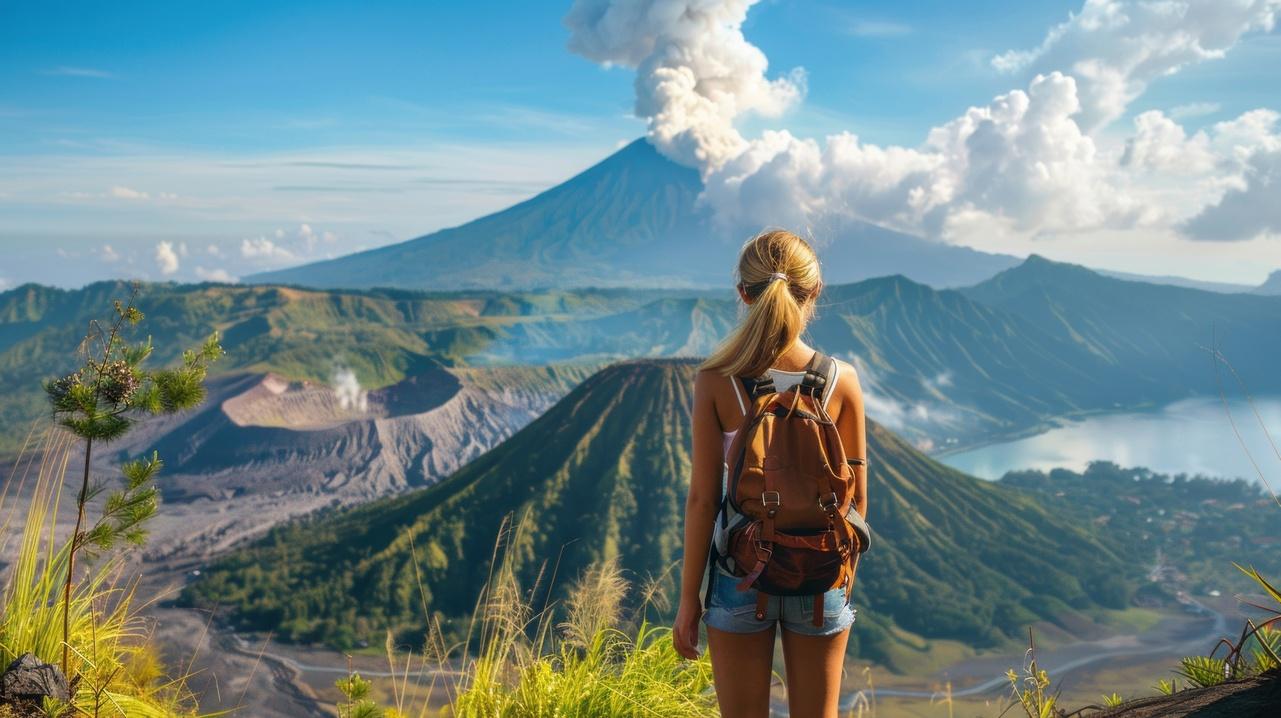
The active summit crater last erupted between 1999 and 2000 and drops roughly 700 meters to the caldera floor, with steam still visible from vents near the rim.
Bali's largest crater lake spans about 16 square kilometers and sits at 1,050 meters elevation, supplying water to surrounding rice terraces and fisheries.
This temple complex honors Dewi Danu, the Balinese goddess of lakes and rivers, and anchors the spiritual importance of the entire caldera for local communities.
Black volcanic rock from Mount Batur's most recent eruptions is still visible along the descent route, a stark contrast against the green caldera slopes.
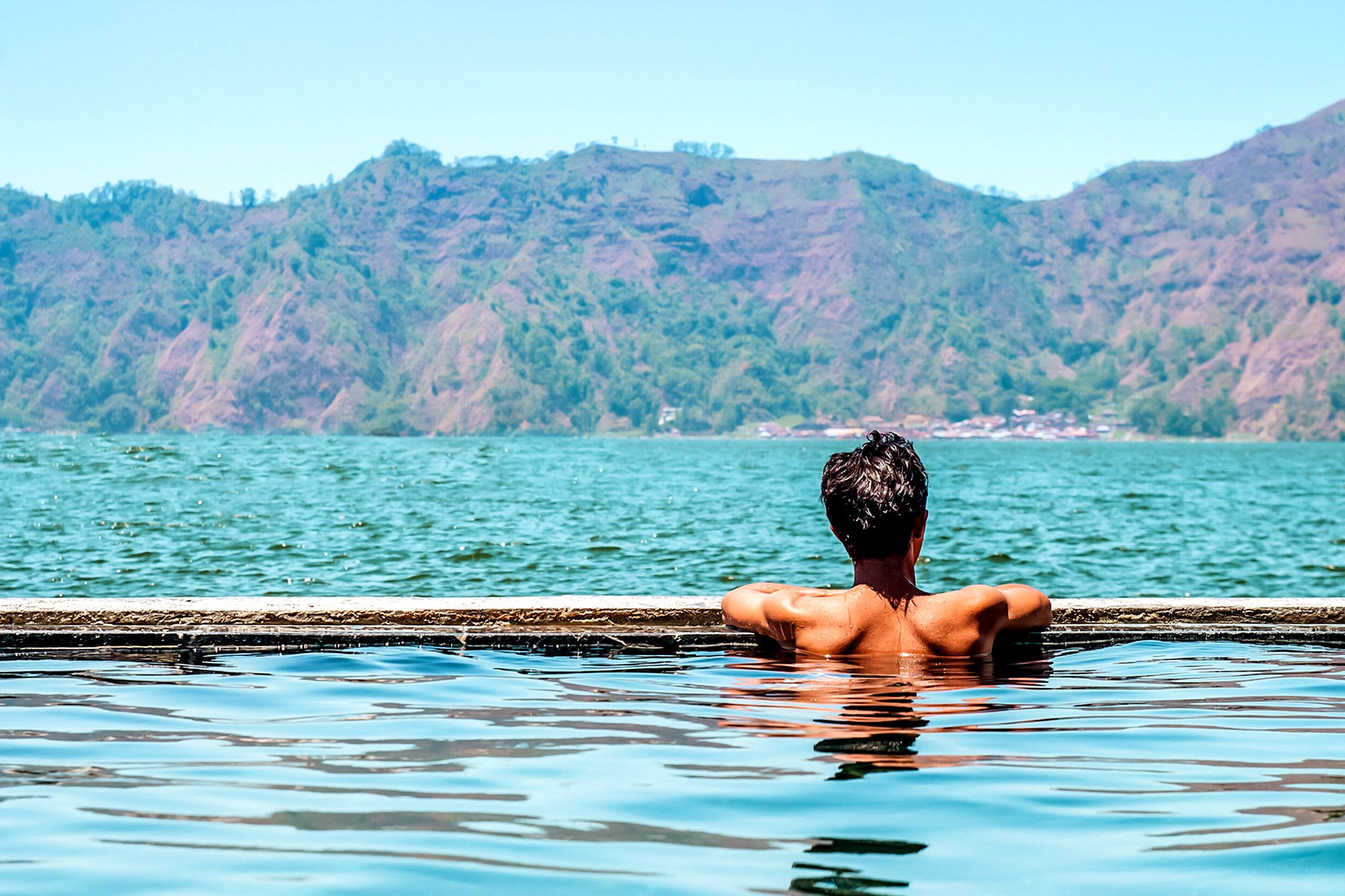
Fed by geothermal activity beneath the volcano, these lakeside pools sit near 1,200 meters elevation and are a common stop for hikers after the descent.
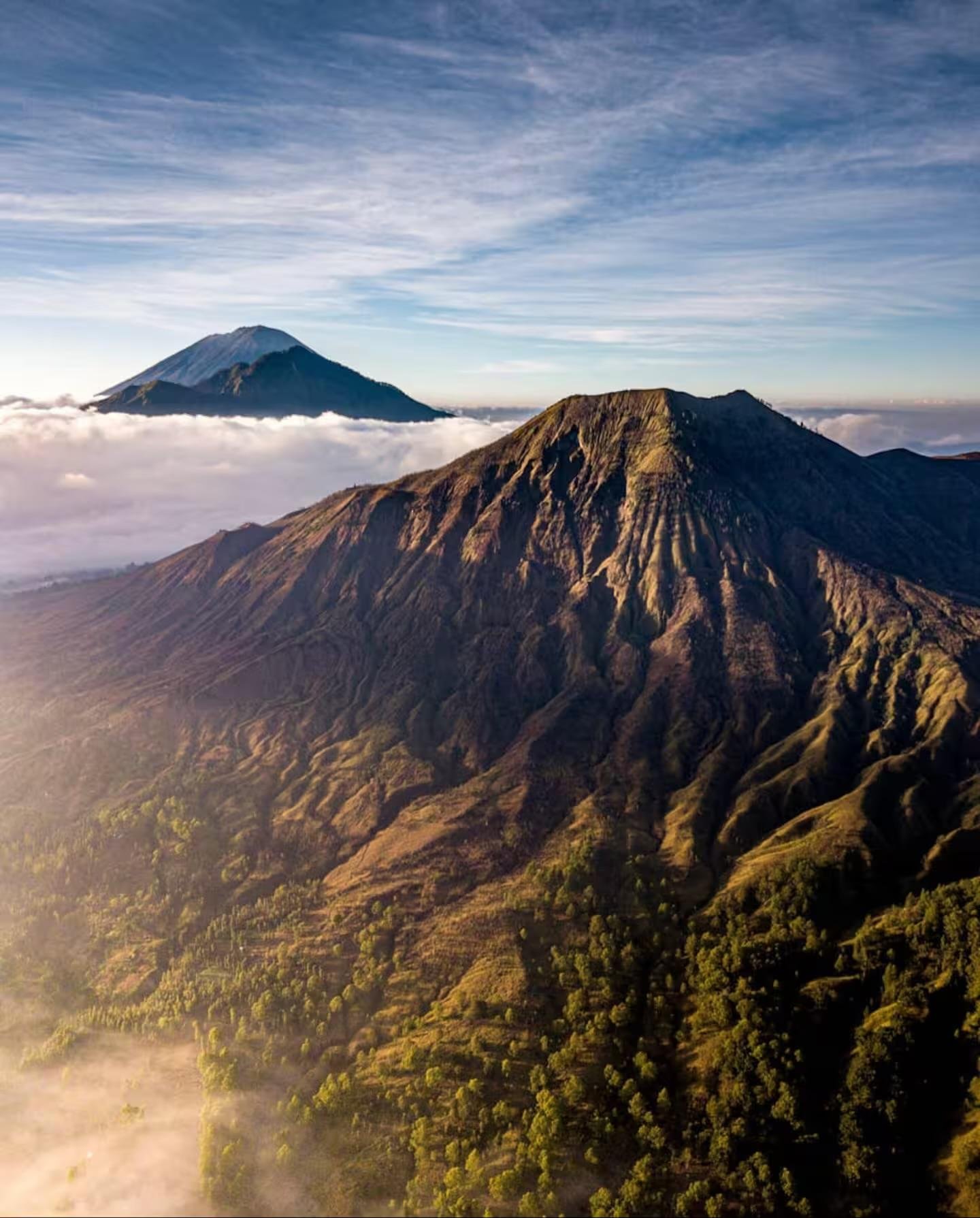
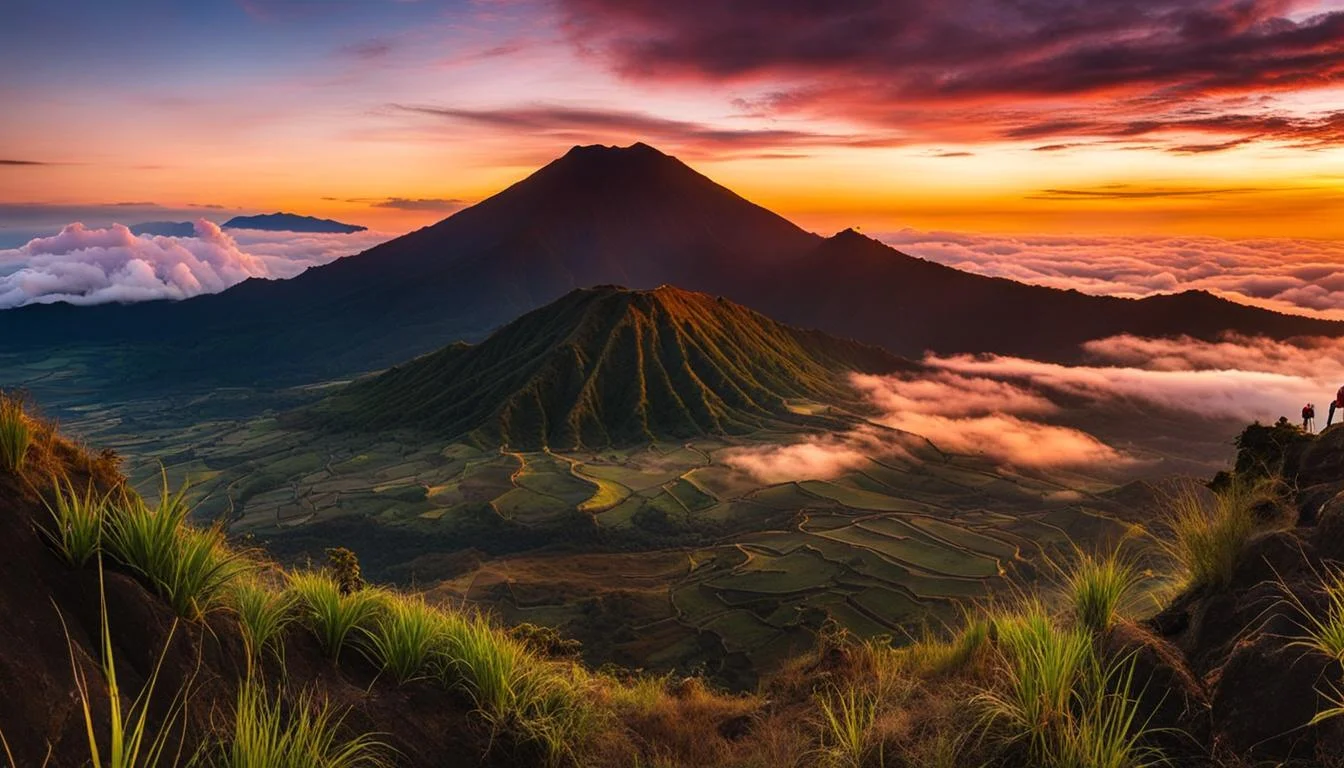
From the summit, hikers face Mount Abang across the caldera, with Mount Agung and occasionally Mount Rinjani in Lombok visible on clear mornings.
You leave in the deep dark, arriving at the trailhead in Kintamani sometime between 02:00 and 04:00 so the rim is within reach before dawn. A guide from the local cooperative hands you a torch, checks your shoes, and sets the pace. The first stretch crosses gentle farmland, then the path tilts upward and the surface turns to loose volcanic scree that shifts under each step. You climb in a slow line of headlamps, pausing to catch your breath where the gradient bites. Halfway up, the trees thin and the lights of villages spread out below like scattered embers. Near the top the air cools sharply; you pull on a layer and keep moving over the last steep pitch to the crater rim at 1,717 metres. Then you wait. You find a spot on the ridge, cup your hands around a warm drink, and watch the sky lighten over Lake Batur. When the sun clears the horizon it throws long shadows across the caldera and lights the cone of Mount Agung to the east. Afterward you walk a short way along the rim, feeling steam rise warm from the vents beneath your feet. The descent takes you back past the lava fields in full daylight — the mount batur sunrise trekking route revealing, on the way down, everything the darkness had hidden on the climb.
All the details about your upcoming adventure in one place
A mount batur sunrise trekking climb leads you up an active volcano in the pre-dawn dark, reaching the 1,717-metre summit as first light breaks over Lake Batur and Mount Agung. Guided by local Kintamani porters, mount batur sunrise trekking tours pair a moderate two-hour ascent with a caldera-rim breakfast often cooked using volcanic steam. The Batur volcano hike sits within a UNESCO Global Geopark, so trails, viewpoints, and geothermal vents are all part of the experience.
Mount Batur last erupted in 2000, and its caldera — one of the largest on Earth at roughly 13 kilometres across — still steams from vents along the summit ridge. The active stratovolcano rises to 1,717 metres in the Kintamani highlands of Bangli Regency, a young cone nested inside the collapsed shell of a far older and larger volcano. Two concentric calderas frame it, evidence of catastrophic eruptions dated to around 29,300 and 20,150 years ago. The mountain has long held sacred weight for the Balinese. Below the summit lies Lake Batur, the island's largest crater lake, fed by mountain springs and revered as the source of irrigation water for much of central Bali. The lake and its temple, Pura Ulun Danu Batur, sit at the heart of the subak system — the cooperative water-management network that UNESCO inscribed as a World Heritage cultural landscape in 2012. Farmers across the southern slopes still draw on Batur's waters, and priests at the lakeside temple are considered custodians of the goddess Dewi Danu. This is why mount batur sunrise trekking carries more than scenic value: the climb passes through terrain that ordinary agricultural life depends upon. The surrounding land tells its own geological story. Black lava fields from the twentieth-century eruptions stretch across the caldera floor, hardened rivers of basalt that vegetation has only partly reclaimed. The Batur Global Geopark, recognised by UNESCO in 2012, protects this record of the volcano's violence and renewal. Hot springs bubble at the lake's edge, warmed by the same magmatic heat that drives the summit fumaroles. For visitors, the appeal is the vantage. From the crater rim the horizon opens across Lake Batur toward Mount Abang and, on clear mornings, the conical silhouette of Mount Agung — Bali's highest peak — with Lombok's Rinjani sometimes visible beyond the strait. The Kintamani volcano sunrise tour has become one of the island's defining outdoor rituals, drawing walkers who set out in darkness to reach the summit ridge as the first light breaks. Local guiding cooperatives, organised community by community, manage access and safety on the trails. A conservation and trekking permit fee of 100,000 IDR per person supports the upkeep of this protected landscape, and the enduring draw of mount batur sunrise trekking tours rests on that balance between an active volcano's raw geology and the sacred, cultivated world that surrounds its base.

The caldera still steams from its vents, a young cone breathing inside the shell of an older, vanished mountain.
Layered clothing is essential for Mount Batur sunrise trekking: temperatures at the 1,717-meter summit sit around 10–15°C before dawn and warm to 20–25°C after sunrise. A windproof jacket, long trousers, and closed-toe hiking shoes with grip are recommended for the loose volcanic gravel underfoot.
There is no formal bag screening at the Pura Jati or Toya Bungkah trailheads, but guides check that hikers are carrying a headlamp and water before departure. A small daypack is sufficient since packed breakfast is usually provided by the guide at the summit.
Photography is unrestricted along the trail and at the crater rim, including drone use in most sections away from Pura Ulun Danu Batur temple grounds, where visitors should ask the guide before flying one. Sunrise light over Mount Abang and Lake Batur is the main draw, so a lens hood helps against direct glare once the sun clears the ridge.
Children above roughly 8–10 years in good health can complete Mount Batur sunrise trekking with a licensed guide, though the pre-dawn 02:00–04:00 start and uneven footing make it a tiring outing for younger kids. Guides from the local HPPGB association can adjust pace for family groups, and handrails exist only on the steepest final stretch below the summit.
The path from Pura Jati or Toya Bungkah climbs roughly 1.5 to 2 hours over volcanic sand and rocky terrain, making it unsuitable for wheelchairs or those with limited mobility. Travelers who cannot hike can still see the caldera from paved viewpoints in Kintamani and Penelokan, reached by car.
Guides on most Mount Batur sunrise trekking tours serve a packed breakfast at the summit, often eggs steamed in volcanic vents, bread, and bananas. Bring at least 1.5 liters of water per person since there are no shops along the trail itself, only small stalls near the Pura Jati and Toya Bungkah car parks.
Trailhead access before dawn, guide check-in required
Quietest weekday for the crater rim
Busiest morning, more shared-tour groups
Best arrival window 02:00–04:00 to reach the crater rim before dawn
location
Car · 60–90 min from Ubud · Round-trip driver fares often run around 400,000 IDR
Private drivers cover the roughly 34–39 km route from Ubud to the Kintamani highlands in about an hour, dropping hikers directly at the Pura Jati or Toya Bungkah trekking association base.
Taxi · 90–120 min · Fares vary by distance and provider
App-based or hotel-arranged taxis from Sanur, Canggu, or Kuta take roughly 1.5 to 2 hours given the climb into the Kintamani District.
Bike · 45–75 min from Ubud · Fuel cost only, no toll roads
Scooter riders can reach the trailhead from Ubud in under an hour on clear roads, though the final approach is dark and winding before dawn.
Public transport · 2–3 hours · Around 100,000–150,000 IDR one-way
Perama shuttle buses run fixed morning departures from Ubud and Kuta to Kintamani, though riders still need a local driver for the final stretch to Pura Jati or Toya Bungkah.
Most Mount Batur sunrise trekking tours allow free rescheduling or cancellation up to 24 hours before the 02:00–04:00 pickup window, refunding the 100,000 IDR conservation and trekking permit fee in full. Cancellations inside 24 hours, or no-shows at the Pura Jati or Toya Bungkah starting point, typically forfeit the permit fee since it is paid directly to the local guide association.
Weather · crowds · average price — dots go green to amber to red as each metric rises.
Bali's dry season brings the clearest skies for Mount Batur sunrise trekking, with June to August the busiest months for shared-group climbs. Early morning temperatures at the summit hover near 10°C, so the visibility trade-off is worth the crowds.
The wet season increases the chance of cloud cover blocking the sunrise view over Mount Abang, though the trail remains open year-round. Mornings after overnight rain can leave the volcanic path slippery.
Peak tourist season in Bali overlaps with the driest weather, meaning the Pura Jati car park fills early and the summit gets crowded by 06:00.
The quietest months for Mount Batur sunrise trekking tours, though hikers should budget extra time in case a climb is postponed for heavy rain or lightning risk.
Local rules require hikers to climb with a guide from the HPPGB trekking association, both for safety on loose volcanic terrain and to avoid unlicensed operators at the car park.
Reaching the Pura Jati or Toya Bungkah trailhead in the 02:00–04:00 window gives enough buffer for the 1.5–2 hour climb before the 06:00–06:30 sunrise.
Summit temperatures near 10°C before dawn climb to 20–25°C after sunrise, so a removable layer keeps the descent comfortable.
The 100,000 IDR conservation and trekking permit fee is typically collected in person at the checkpoint rather than online.
The Pura Jati route sees heavier shared-tour traffic, while Toya Bungkah's trail is longer but less congested at peak season.
Monkeys near the main crater rim are used to hikers, so keep food packed away until guides distribute breakfast.
Wet-season mornings between October and March carry a higher chance of cloud blocking the sunrise view over Mount Abang.
Jl. Batur, Kedisan, Kintamani, Bangli Regency, Bali
Widest parking area, main starting point for shared-group Mount Batur sunrise trekking tours
Get directionsToya Bungkah, Kintamani, Bangli Regency, Bali
Lakeside starting point near hot springs, well-maintained trail from around 1,200 meters elevation
Get directions
Real experiences from real travelers
The 2am pickup felt brutal but the mount batur sunrise trekking pace was steady and our guide set a rhythm that suited everyone. We reached the rim just as the sky turned amber over Lake Batur and the cold at the top vanished the moment the sun hit. Bring a windbreaker, the summit is genuinely chilly before dawn.
Loved that they cooked eggs and bananas in the volcanic steam vents once we summited, a small touch that made the morning. The Gunung Batur tour started in pitch dark and the loose gravel near the top demanded good shoes. Watching the caldera light up while eating breakfast is a memory I'll keep.
Our Kintamani guide grew up in the village and pointed out Mount Agung and Mount Abang as they emerged from the clouds. The mount batur sunrise trekking tour was well organised from hotel pickup to the coffee stop afterward. Fitness-wise it's moderate, doable if you walk regularly.
The sunrise over the caldera was every bit as good as promised, though the top gets busy with several groups arriving at once. Booking the mount batur sunrise trekking tickets in advance meant our pickup was on time and hassle-free. Would have liked a slightly smaller group but no real complaints.
We nearly cancelled because of forecasts but our operator checked conditions and the sea of clouds below the summit was the highlight. Trekking Mount Batur in the dark with headlamps felt like an adventure and the descent showed off black lava fields from old eruptions. Warm gloves would have helped at the peak.
Comparing options for Kintamani volcano hikes, this one had the clearest communication and a genuinely knowledgeable guide. The mount batur sunrise trekking tours include a hot drink at the top which is very welcome in the pre-dawn cold. Descending in daylight we saw the whole terraced valley open up.
I was nervous about the climb but the guide kept a manageable pace with rest stops on the steeper volcanic scree. Reaching the rim of Mount Batur as the horizon turned pink made every step worthwhile. The coffee plantation stop on the way back was a nice unhurried finish.
Underestimated how cold the summit gets at 4am so pack more than you think you need. The Mount Batur sunrise trek itself was well paced and the guide carried spare water for the group. Lake Batur glowing under the first light is the image that stuck with me.
The Mount Batur volcano hike delivered a sunrise over the caldera that our photos barely captured. Small group, attentive guide, and the steam vents near the crater rim were a genuine surprise. Sturdy trainers are enough, no need for full hiking boots.
Left in darkness and summited with time to settle before the sun rose over Mount Abang, no rushing. Booking the mount batur sunrise trekking tour was straightforward and the driver waited patiently after our slow descent. The quiet at the top before the crowds arrived was the best part.
Everything you need to know for your journey
Most operators recommend arriving at the Pura Jati or Toya Bungkah trailhead between 02:00 and 04:00 so the roughly 1.5 to 2 hour climb finishes before the 06:00–06:30 sunrise.
The volcanic trail is steep and unpaved, so it is not accessible for wheelchairs; travelers with mobility limits can still view the caldera from paved lookouts in Kintamani or Penelokan.
Glass bottles, single-use plastic bags, drones near temple grounds, and loud speakers are discouraged on Mount Batur sunrise trekking routes, along with alcohol and open flames outside rest points.
Photography is unrestricted along the trail and crater rim, though drone flights near Pura Ulun Danu Batur should be cleared with the guide first.
The dry season from April to September gives the clearest sunrise views over Mount Abang, with June to August the busiest months for shared Mount Batur sunrise trekking tours.
Layered clothing works best since summit temperatures sit around 10–15°C before dawn and warm to 20–25°C after sunrise; sturdy hiking shoes handle the loose volcanic gravel.
Guides typically serve a packed breakfast at the summit, but hikers should bring at least 1.5 liters of water since there are no shops on the trail itself.
Private drivers or taxis cover the roughly 34–75 km route from Ubud, Sanur, or Kuta in one to three hours, dropping hikers at the Pura Jati or Toya Bungkah starting point.
Children in good health, generally above 8–10 years old, can join with a licensed guide, though the early 02:00–04:00 start makes it a long day for younger kids.
Most mount batur sunrise trekking tickets can be rescheduled or refunded up to 24 hours before pickup, with the 100,000 IDR permit fee returned in full within that window.
Lake Batur, Pura Ulun Danu Batur temple, and the Toya Bungkah hot springs all sit within a short drive of the trailhead and pair well with the climb.
The conservation and trekking permit fee is 100,000 IDR per person, paid directly at the Pura Jati or Toya Bungkah checkpoint.
Bali's largest crater lake sits at 1,050 meters elevation inside the Batur caldera and supplies water for surrounding agriculture and fisheries.
This major temple honors Dewi Danu, the Balinese goddess of lakes and rivers, and anchors the caldera's spiritual significance.
Natural hot spring pools sit near the Toya Bungkah starting point, popular for a post-hike soak.
Ridge-top cafes in Kintamani overlook the caldera and Lake Batur without requiring a hike.
Sitting around 1,500 meters up on the caldera rim, Penelokan offers wide views over Mount Batur and the lake below.
Ridge-top guesthouses and small hotels near the caldera rim offer the shortest transfer to the Pura Jati trailhead.
Simple guesthouses cluster near the lakeside starting point and hot springs, convenient for a pre-dawn departure.
Ubud has the widest hotel selection in the region, with most Mount Batur sunrise trekking tours offering hotel pickup from here.
Join thousands of happy travelers who have discovered this incredible experience
Book Your Experience Now